2026 Top Fast Power Bank Suppliers for Global Buyers

Time:2026-10-11 Author:Isabella
0%

The global Fast Power Bank market is entering a more demanding stage in 2026. Buyers now expect higher wattage, safer cells, clearer certifications, and stable supply. A slim 20,000mAh unit may charge a laptop, phone, and tablet during one working day. However, printed capacity does not always reflect usable output. Conversion losses, heat, cable quality, and charging protocols can change the real experience.

Battery University founder Isidor Buchmann has stated, “Safety is the most important aspect of a battery.” That principle remains essential when comparing Fast Power Bank suppliers. Reliable manufacturers should explain cell chemistry, protection circuits, thermal controls, cycle testing, and warranty coverage. They should also provide consistent samples before accepting large orders. A factory photograph is not proof of production quality. Neither is an attractive product page.

This guide examines the 2026 Top Fast Power Bank Suppliers for Global Buyers through practical purchasing criteria. These include output performance, USB-C compatibility, customized branding, minimum order quantities, inspection support, lead times, and after-sales communication. We also consider how suppliers respond when something goes wrong. That detail matters.

No supplier is perfect.

Market data can change quickly. Some listed companies may improve, merge, or lose capacity during the year. Therefore, buyers should verify current certifications, test reports, battery specifications, and export documentation before signing contracts. Our evaluation may still contain gaps. Real-world performance can differ between laboratory tests and airport lounges, warehouses, or crowded trade shows. The goal is not to promise a flawless choice. It is to help global buyers ask sharper questions and select a Fast Power Bank partner with evidence, discipline, and dependable communication.
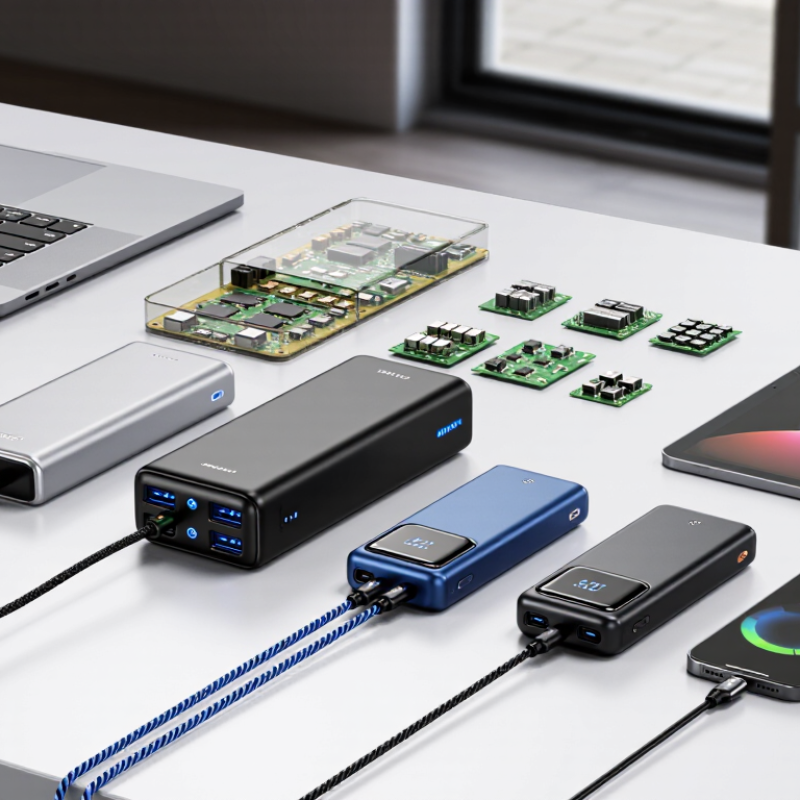
2026 Top Fast Power Bank Suppliers for Global Buyers

What Defines a Fast Power Bank in 2026

What Defines a Fast Power Bank in 2026

A fast power bank is not defined by one impressive wattage number. It must deliver stable power across phones, tablets, laptops, and smaller devices. USB-C Power Delivery remains central, while PPS support helps compatible devices charge more efficiently. A practical model should maintain strong output when two ports operate together. Peak performance is useful. Sustained performance matters more.

Thermal control now deserves equal attention. Internal sensors, layered safety protection, and well-designed heat paths reduce charging interruptions. Buyers should examine capacity at rated voltage, not only the larger printed battery figure. A 20,000mAh unit may provide less usable energy after conversion losses. That detail is easy to miss. Certification records, cell traceability, cycle-test results, and transport documentation also help suppliers prove reliability.

From a sourcing perspective, serious suppliers provide clear test reports and realistic charging tables. They explain which devices reach high-speed charging and which do not. Their samples should be tested with different cables, temperatures, and load levels. I still find that some product claims look stronger than real-world results. A short charging demonstration cannot replace repeated testing. Buyers may also need to question repairability, firmware updates, and battery aging. Fast charging feels simple, but dependable speed requires careful engineering from the cell to the cable.

Key Specifications for Comparing Global Suppliers

Global buyers comparing fast power bank suppliers should start with measurable electrical specifications, not attractive casing. Check rated capacity in watt-hours, since advertised milliamp-hours can hide voltage differences. A 20,000 mAh unit is not automatically stronger. Review USB-C input and output profiles, including PD voltage ranges and PPS support. Record simultaneous output limits when two devices charge together. Fast charging drops quickly under heat. Ask for efficiency data at low, medium, and peak loads. A clear test report matters more than a sales promise.

In practical sourcing work, I compare prototype results with independent laboratory measurements. Request samples from the same production batch, then test charging time, surface temperature, and standby drain. Measure with calibrated meters. Inspect cell type, protection circuits, short-circuit response, and over-temperature controls. Suppliers should provide UN38.3 transport documentation and applicable safety certification records. Do not accept copied certificates with unclear model numbers. That mistake is expensive. Cycle-life claims also need a defined test method, temperature, and remaining-capacity threshold.

Supplier capability includes MOQ, sample fees, tooling ownership, lead time, packaging options, and replacement procedures. Ask how serial numbers trace cells and final assembly. A stable supplier explains deviations instead of hiding them. Confirm warranty terms in writing, including capacity loss and charging-port failures. Production audits, corrective-action records, and change notifications reveal more than polished brochures. I still leave room for doubt. Ratings may change after firmware, cell, or component substitutions. Test it yourself. Recheck pre-shipment samples, especially when delivery schedules become tight.

Leading Fast Power Bank Suppliers by Market Focus

Leading fast power bank suppliers in 2026 are increasingly organized by market focus, not only by charging speed. Suppliers serving travel retailers usually prioritize compact designs, airline-conscious capacity labeling, USB-C compatibility, and multilingual packaging. Their production systems must handle frequent model changes and seasonal demand.

Corporate procurement teams need different support. They often request logo customization, stable delivery schedules, sample approval, and documented cell safety testing. A dependable supplier should explain power output, recharge time, thermal protection, warranty handling, and quality-control procedures clearly. Certifications matter. Buyers should verify test reports and destination-market requirements instead of accepting copied documents.

Outdoor and mobile-work suppliers typically emphasize rugged shells, dust resistance, visible battery indicators, and reliable performance in changing temperatures. E-commerce-focused suppliers may offer lower minimum order quantities, photography support, and flexible packaging. However, low pricing can hide inconsistent cells or weak after-sales service. Samples expose weak points. We have seen attractive prototypes fail during repeated charging tests, especially around ports and heat control. Suppliers with automated testing, traceable production records, and transparent defect policies deserve closer attention. Not every supplier fits. Market-specific experience often matters more than a long product catalog.

2026 Top Fast Power Bank Suppliers by Market Focus

Estimated global sourcing demand by buyer region for fast-charging power bank suppliers.

Asia-Pacific represents the largest sourcing focus, supported by strong electronics manufacturing capacity and high mobile-device adoption. North America and Europe show substantial demand for higher-output USB-C power banks, while Latin America and the Middle East & Africa remain growth-oriented markets.

Quality, Safety, and Certification Requirements

For global buyers, a fast power bank is only as credible as its safety evidence. The International Energy Agency reported that global battery demand exceeded 750 GWh in 2023, increasing pressure on cell quality and traceability. Power banks need tested cells, controlled charging, and protection against over-current, overheating, short circuits, and deep discharge. Ask suppliers for UN 38.3 transport test records and IEC 62133-2 safety documentation. These are practical starting points, not decorative paperwork.

Certification details must match the actual product. Check the model number, cell configuration, rated capacity, test laboratory, and report date. For shipments, lithium battery transport data should follow the UN Manual of Tests and Criteria, 8th revised edition. Depending on the destination, buyers may also need EMC, electrical safety, chemical compliance, and local conformity documents. Requirements differ.

Fast charging deserves extra scrutiny. A 20,000 mAh unit may advertise high output, yet its usable energy can fall after conversion losses and heat control. Request thermal test results at maximum load. Also review cycle-life data, although supplier figures are sometimes optimistic. I have seen impressive samples fail after repeated cable bending and pocket-level heat exposure. That weakness is easy to miss. Independent pre-shipment testing remains worthwhile, especially when documentation looks complete but lacks raw test conditions. Reports from the IEA and IEC standards should guide verification, not replace it.

How Global Buyers Can Evaluate and Select a Supplier

2026 Top Fast Power Bank Suppliers for Global Buyers

Global buyers should evaluate suppliers beyond advertised capacity and charging speed. Grand View Research estimates the global power bank market reached USD 13.61 billion in 2023, with an expected 8.1% CAGR through 2030. This growth attracts capable factories and inconsistent sellers. Ask for measured output, not printed claims. A 20,000mAh unit may deliver less usable energy after voltage conversion. Request test reports showing efficiency, temperature rise, cycle performance, and standby drain. Numbers need context.

The USB-IF Power Delivery specification supports up to 240W under Extended Power Range, but a power bank still needs safe thermal design and compatible components.

Supplier selection should include a sample review, factory audit, and production trial. Check cell traceability, battery management settings, protection against overcharge, short circuits, and overheating. Require documentation from recognized testing laboratories, with model numbers matching the samples. Examine packaging, labeling, warranty terms, and replacement procedures. Delivery records matter too. A supplier can pass one sample test and still miss a shipment. Ask for recent on-time delivery data, capacity planning, and backup production arrangements. Do not trust labels alone. I would also test several units from different batches, because one perfect sample proves very little. Cost remains important, but unusually low pricing may hide weaker cells, thinner cables, or incomplete testing. A clear specification sheet, responsive engineering team, and honest explanation of limitations usually reveal more than a polished sales presentation.

FAQS

Which electrical specifications should buyers compare first?

Compare rated watt-hours, not only advertised milliamp-hours. Voltage differences can make two 20,000 mAh units perform differently. Check USB-C input, output, PD ranges, PPS support, and simultaneous charging limits.

How can buyers verify fast-charging claims?

Request samples from the same production batch. Measure charging time, surface temperature, efficiency, and standby drain with calibrated meters. Sales promises are not enough.

Why does heat matter during charging?

Charging speed can fall sharply as temperature rises. Test low, medium, and peak loads. Record surface temperature near the ports and battery area.

What safety information should a supplier provide?

Ask for cell details, protection-circuit information, short-circuit response, and over-temperature controls. Request current transport documents and applicable safety records. Check model numbers carefully.

How should buyers assess cycle-life claims?

Require the test temperature, charging method, cycle count, and remaining-capacity threshold. A claim without testing conditions means very little. I would remain cautious.

What supplier capabilities matter beyond product performance?

Review minimum order quantities, sample fees, tooling ownership, lead times, packaging choices, and replacement procedures. Confirm warranty coverage for capacity loss and port failures.

How can buyers detect production inconsistencies?

Ask how serial numbers trace cells and final assembly. Review audit findings, corrective actions, and change notifications. Recheck pre-shipment samples when deadlines become tight.

Do different markets need different supplier strengths?

Yes. Travel retailers may need compact designs, clear capacity labels, multilingual packaging, and frequent model changes. Corporate buyers often need customization and stable delivery.

What features matter for outdoor or mobile-work users?

Look for rugged shells, dust resistance, visible battery indicators, and stable operation across changing temperatures. Test the casing after repeated charging. Prototypes can disappoint.

Is the lowest price a reliable buying advantage?

Not always. Low pricing may hide inconsistent cells, weak heat control, or poor after-sales support. Flexible packaging and small order quantities help, but samples reveal more.

Conclusion

In 2026, a Fast Power Bank is defined by more than high charging speed. Global buyers should assess output power, charging protocols, battery capacity, recharge time, thermal control, portability, and compatibility with phones, tablets, laptops, and other devices. Reliable suppliers should provide clear technical specifications, stable performance, efficient power conversion, and product designs that balance speed, safety, durability, and convenience. Different suppliers may focus on consumer electronics, business procurement, travel products, or customized solutions, so buyers should select partners according to their target markets and application needs.

Quality and compliance are essential when comparing international suppliers. Buyers should review manufacturing capabilities, quality-control procedures, battery protection systems, testing records, and applicable safety certifications for their destination markets. They should also evaluate sample quality, production capacity, lead times, warranty terms, communication, pricing transparency, and after-sales support. A careful supplier assessment process, including sample testing and documentation review, helps global buyers choose a dependable Fast Power Bank supplier and reduce risks throughout sourcing and distribution.

Isabella

Isabella

Isabella is a dedicated marketing professional with a sharp focus on driving brand growth and engagement through strategic content creation. With an extensive background in digital marketing, she combines her passion for storytelling with her keen understanding of industry trends to deliver......