The 2026 Pin Charger market is becoming more diverse, compact, and demanding. Global buyers now compare pogo-pin chargers, USB-C pin chargers, magnetic charging pins, and spring-loaded contact systems. Each type affects charging speed, durability, sealing, repairability, and certification requirements.
The International Energy Agency reported more than four million public electric-vehicle charging points worldwide at the end of 2023. Its Global EV Outlook 2024 also recorded approximately 40% annual growth in public chargers. This broader expansion reflects a clear trend: buyers expect safer, faster, and more standardized charging connections. The USB Implementers Forum has promoted USB Type-C as “a future-proof connector,” according to its technical communications. Jeff Ravencraft, USB-IF President and CEO, has repeatedly emphasized Type-C’s role in simplifying device connectivity.
Small details matter.
A pogo-pin charger may suit wearable devices, industrial terminals, and handheld scanners because its spring contacts tolerate repeated docking. Magnetic pin chargers offer convenient alignment, but weak magnets or exposed contacts can create practical reliability concerns. USB-C solutions provide strong ecosystem support, yet thermal design and power negotiation still require careful engineering. A connector alone does not guarantee fast charging.
Market reports from Grand View Research and Fortune Business Insights show strong growth across charging infrastructure and connector-related applications. However, these reports often combine several technologies. They should not be treated as exact forecasts for Pin Charger sales.
This guide examines the leading Pin Charger types for global buyers in 2026. It considers contact design, power delivery, ingress protection, lifecycle testing, sourcing risks, and regional compliance. Some popular choices may not be ideal. That is worth questioning.
What Is a Pin Charger and How Does It Work?
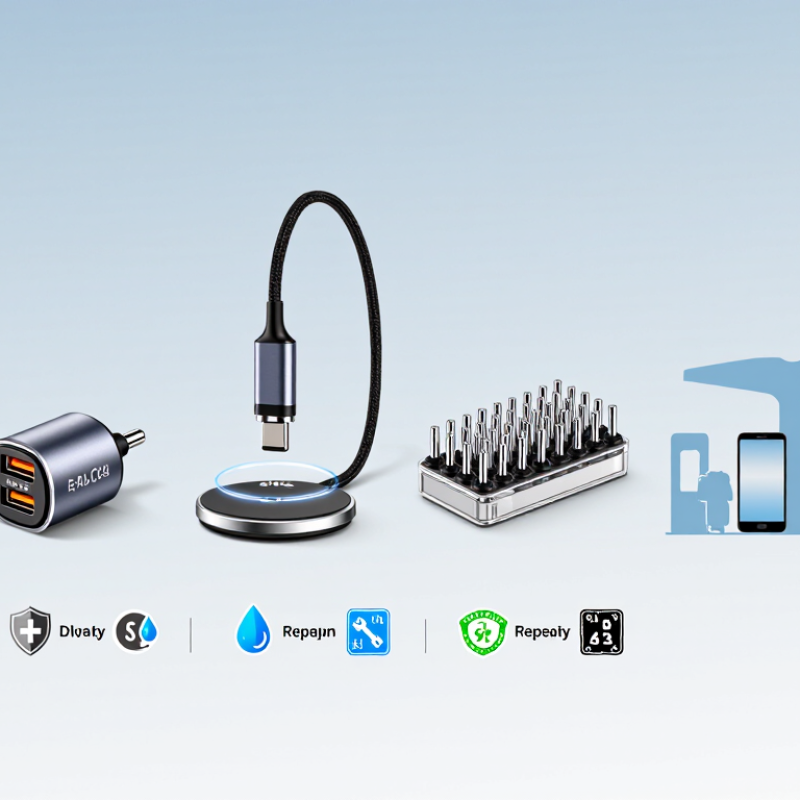
In global sourcing, “pin charger” can sound more specific than it is. The term usually describes a charger that transfers power through exposed metal contact pins. These pins touch matching pads on a device, dock, or charging cable. Some are fixed prongs. Others use spring-loaded pogo pins. The second design tolerates small alignment errors and repeated docking. It appears in compact electronics, wearable devices, test fixtures, and charging cradles.
The charging path is simple. An adapter converts mains electricity into controlled, low-voltage direct current. The positive pin carries current toward the device. The return pin completes the circuit. A charging controller checks voltage, temperature, battery condition, and contact quality. If the pins meet poorly, resistance rises and heat can develop. Some systems stop charging when contact becomes unstable. Contact quality matters.
For 2026 purchasing, buyers may compare two-pin, three-pin, magnetic, and pogo-pin arrangements. The suitable type depends on current demand, alignment, enclosure space, and cleaning conditions. Ask for pin material, spring-cycle data, polarity drawings, and measured output tests. Also verify regional plug compatibility and applicable electrical safety requirements. Independent test reports strengthen supplier claims. Do not trust appearance alone. I have seen neat connectors fail after dust entered the contact gap. That experience is easy to overlook. Reliable performance depends on contact pressure, protection circuits, and consistent manufacturing.
2026 Top Pin Charger Types for Global Buyers
A pin charger transfers electrical power through conductive metal pins. For mains-powered chargers, the plug type determines physical compatibility, while the charger input rating must match the local voltage and frequency.
How to read the chart: The bars show representative nominal mains-voltage ranges commonly associated with each plug family. Type A/B is used across regions with approximately 100–127 V supplies, while most other listed pin types are used with approximately 220–240 V supplies. Buyers should verify the destination country's socket standard, voltage, frequency, grounding requirements, and the charger's input range before purchasing.
Which Pin Charger Types Will Lead the Global Market in 2026?
Which Pin Charger Types Will Lead the Global Market in 2026?
USB-C pin chargers are likely to lead global demand in 2026. Their reversible connector supports phones, tablets, laptops, and many accessories. A single 65W charger can replace several older adapters in a travel bag. GaN technology also allows smaller housings and lower heat during regular use.
Regional AC pins will still matter. Type A and Type C plugs remain common across large consumer markets, while Type G, Type I, and other formats serve local systems. Buyers will increasingly prefer chargers with interchangeable pin modules. This design reduces luggage space and simplifies product distribution. However, loose modules may create reliability concerns. I would test connection strength repeatedly before approving a large shipment.
Multi-port USB-C chargers should gain attention among families, offices, and mobile workers. Power-sharing performance matters more than the printed wattage. During practical testing, two laptops may charge slowly when several ports operate together. Clear output labels and stable thermal control build trust. Some compact models also include USB-A, because older cables have not disappeared.
Market leadership will depend on more than connector popularity. Importers should review electrical safety reports, regional plug compatibility, insulation quality, and charging efficiency. Suppliers with documented testing and consistent production records deserve closer evaluation. Fast charging is attractive, but durability often decides repeat purchases. The market may favor flexible pin systems, yet simple designs could remain safer and easier to maintain.
How Do Connector Pins, Power Ratings, and Standards Differ?
2026 Top Pin Charger Types for Global Buyers
For global buyers, pin charger selection starts with the connector, not the advertised wattage. Connector pins define polarity, contact stability, and charging compatibility. Barrel connectors often use an inner positive pin and outer negative sleeve. Reversing them can damage equipment. Pogo pins suit docking stations and compact devices, but they need accurate alignment. Small details matter.
Power ratings require practical inspection. A charger marked 12 V and 2 A can deliver up to 24 W under rated conditions. The device should never receive a higher voltage than specified. Current capacity may be higher, provided the device controls its draw. Cable length, contact resistance, and heat can reduce actual performance. Heat changes everything. I have seen compact connectors become noticeably warm during extended testing, even when their printed rating looked sufficient. That result deserves investigation, not dismissal.
Standards also differ across markets and product categories. Buyers should check insulation, grounding, touch protection, efficiency, and electromagnetic compatibility requirements. International safety frameworks may reference IEC principles, while regional approval systems add their own testing rules. Connector dimensions are not automatically standardized worldwide. A matching shape can still hide different pin assignments. Request current test reports, wiring diagrams, operating temperature data, and derating curves from suppliers. Datasheets help, but real samples reveal tolerance problems. A careful buyer should test several production samples rather than trust one successful prototype.
What Should Global Buyers Check Before Choosing a Pin Charger?
Global buyers should define “pin charger” before comparing prices. It may mean a two-pin plug, a grounded three-pin plug, or a DC barrel connector. Type A, C, G, and I plugs serve different socket systems. Voltage also varies widely, from 100V to 240V. Check the input range, frequency, output voltage, current, polarity, and connector dimensions. A small mismatch can overheat equipment or prevent charging.
Safety evidence matters more than polished product photos.
IEC 60884-1 covers household plugs and sockets, while IEC 62368-1 addresses many information and communication technology power supplies. Ask for current test reports, insulation results, temperature-rise data, and protection against short circuits. USB-C does not automatically mean fast charging; the USB Power Delivery specification supports power levels up to 240W, but both charger and device must negotiate correctly. The IEA’s Global EV Outlook 2024 reported more than four million public electric-vehicle charging points worldwide in 2023, showing how quickly charging infrastructure is scaling. However, that figure does not prove every connector is suitable for every market.
Before ordering, request production samples and test them with real cables, sockets, and loads. Measure heat after several hours, not only during a five-minute inspection. Confirm plug retention, pin spacing, grounding, labeling, and replacement availability. A supplier may quote a lower unit price while excluding testing, adapters, or regional packaging. That can distort the landed cost. I would also check warranty terms and factory quality records. A perfect datasheet is not enough. Human assembly errors still happen.
How Can Buyers Compare Safety, Compatibility, and Supply Options?
2026 Top Pin Charger Types for Global Buyers
How Can Buyers Compare Safety, Compatibility, and Supply Options?
Pin chargers now include USB-C, barrel connectors, magnetic contacts, and spring-loaded pogo-pin docks. Each type suits different equipment.
Safety should be checked before price. Request voltage, current, polarity, insulation, and temperature test records. Confirm protection against short circuits, overcurrent, and overheating. Examine the connector closely. Pins should not loosen after repeated insertion. A sample test using a fixed load can reveal heat near the contacts. Small details matter.
Compatibility requires more than matching the plug shape. Buyers should compare pin spacing, contact depth, charging protocols, output tolerance, and device power demands. A connector may fit while charging poorly. Ask for drawings, tolerance data, and sample units. Test them with the actual device, not only a laboratory adapter. That step is often skipped. It should not be.
Supply options need equal attention. Evaluate production capacity, inspection procedures, traceable materials, minimum order quantities, and replacement support. Request lead-time data for normal and peak seasons. Regional plug requirements may also change packaging and testing needs. Keeping two qualified sources can reduce disruption, although it increases coordination work. A spreadsheet can still mislead when sample quality differs from mass production. Buyers should repeat inspections before approval and after the first shipment.
FAQS
A pin charger transfers power through exposed metal contacts. These pins touch matching pads on a device or dock.
An adapter converts mains power into controlled, low-voltage direct current. One pin carries current, while another completes the circuit.
Spring-loaded pins tolerate small alignment errors. They also support repeated docking in compact devices and charging cradles.
Poor contact increases resistance and may create heat. Some charging systems stop automatically when contact becomes unstable.
Reversible digital connectors, regional plug systems, magnetic contacts, and pogo-pin docks may remain important. No single design fits every device.
Request voltage, current, polarity, insulation, and temperature test records. Confirm short-circuit, overcurrent, and overheating protection.
Compare pin spacing, contact depth, output tolerance, charging protocols, and device power needs. Test samples with the actual device.
Check production capacity, inspection methods, material traceability, minimum order quantities, and replacement support. Keep two qualified sources when practical.
No. A neat connector can fail after dust enters the contact gap. I would test samples repeatedly before approval.
Use a fixed load and measure contact temperature. Repeat insertions and removals. Printed wattage alone can mislead.
Conclusion
A Pin Charger is a compact charging solution that transfers electrical power through dedicated connector pins, allowing compatible devices, batteries, or equipment to charge efficiently. This article examines the pin charger types expected to gain attention among global buyers in 2026, including compact low-power designs, high-output charging units, magnetic or spring-loaded pin systems, and application-specific configurations. Each type offers different advantages in convenience, charging speed, durability, and installation flexibility.
The guide also explains how connector pin layouts, current and voltage ratings, charging protocols, and regional standards affect performance and compatibility. Before making a purchase, buyers should verify device specifications, pin alignment, contact materials, thermal protection, ingress resistance, certification requirements, and expected service life. Comparing safety features, production consistency, customization capabilities, minimum order quantities, lead times, warranty support, and supply stability can help businesses select a reliable Pin Charger solution that meets both technical requirements and long-term sourcing needs.

 ELITE POWER