Choosing a smart Battery Charger can strengthen global sourcing decisions, especially when products move across warehouses, climates, and voltage systems. A basic charger may deliver power. A smart model monitors battery chemistry, temperature, voltage, and charging progress. That difference matters.
Isidor Buchmann, founder of Cadex Electronics and Battery University, states, “A battery is a fragile device. It is easily damaged if abused.” His warning reflects a practical sourcing concern. An unsuitable charger can create overheating risks, shorter battery life, inconsistent performance, and higher warranty costs. Smart charging reduces these problems through automatic current control and protective shutoff features.
Global buyers also need dependable documentation. Look for verified test reports, clear input and output specifications, traceable components, and stable factory quality controls. A supplier should explain compatibility for lithium-ion, lead-acid, or other supported chemistries. It should also provide realistic production timelines and responsive technical support. Small details matter. A missing connector specification can delay an entire shipment.
Smart charging is not a perfect solution. Software can fail, sensors can drift, and supplier claims may require independent verification. That weakness deserves attention. Buyers should test samples under real operating conditions, including cold storage, repeated charging, and variable input voltage. The strongest sourcing strategy balances safety, efficiency, total ownership cost, and supplier credibility. For international procurement teams, a well-designed Battery Charger is more than an accessory. It becomes a practical control point for product reliability, customer trust, and long-term supply performance.
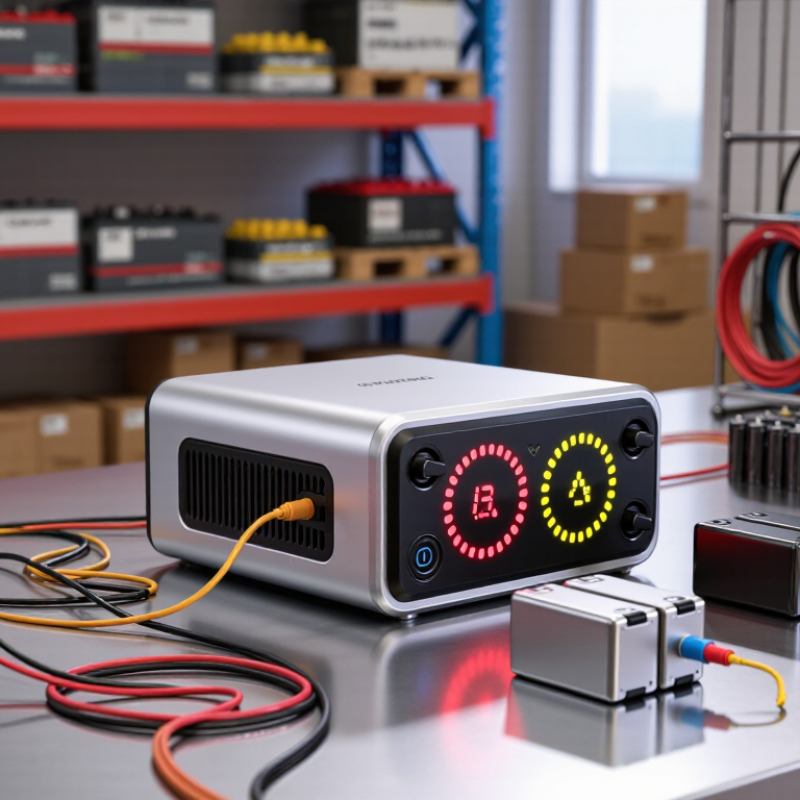
A smart battery charger is an electronic device that adjusts charging based on battery condition. It does more than deliver constant power. Sensors monitor voltage, current, temperature, and charging progress. The charger then selects suitable charging stages for the battery chemistry and capacity.
During normal operation, it may begin with a controlled current, reduce output near full capacity, and switch to maintenance mode. This helps limit overheating, overcharging, and unnecessary energy use. A basic charger often stops at a fixed point. A smart charger responds to real conditions. It is not magic. Poor settings can still damage an unsuitable battery.
For global sourcing, this difference affects product quality, user safety, and long-term reliability. Buyers should request clear input and output specifications, supported battery types, protection functions, and testing records. Ask whether the charger detects reverse connection, short circuits, abnormal temperature, and battery faults. That matters. In practical supplier evaluations, unclear protection data often signals weak engineering control. Still, the word “smart” can mislead. Some products offer only simple automatic timing, not genuine condition-based charging. A careful buyer should compare technical documents with independent test results, sample performance, and production consistency. The charger must also match regional voltage requirements and approved electrical standards. Small details matter, especially when thousands of units enter different markets.
Smart charging technology uses sensors, software, and controlled current to charge batteries safely and efficiently. It measures voltage, temperature, and charging progress several times each second. The charger then adjusts its output instead of delivering one fixed current.
During testing, a typical smart charger begins with a steady bulk charge. It supplies higher current while the battery accepts energy easily. As voltage rises, the charger reduces current and enters an absorption stage. This prevents unnecessary stress and limits heat buildup. When the battery reaches a suitable level, the charger may switch to maintenance mode. Small, controlled pulses can preserve charge without continuous overcharging.
This process supports more reliable global sourcing. Buyers can evaluate chargers by charging profiles, safety protections, input compatibility, and documented test results. A quality unit should detect reverse polarity, short circuits, overheating, and unsuitable battery conditions. It should also support the battery chemistry and voltage specified by the equipment manufacturer.
In practical use, smart charging is not magic. A damaged battery may still fail. Cold or very hot conditions can also reduce performance. I have found that clear manuals and measurable specifications matter more than impressive claims. One weakness remains: some chargers make decisions that users cannot easily inspect. That limitation deserves attention when comparing suppliers.
| Data Dimension | Typical Smart Charger Data | How Smart Charging Works | Global Sourcing Relevance |
|---|---|---|---|
| Battery Chemistry | Lead-acid, AGM, gel, lithium-ion, and LiFePO₄ versions are commonly available. | The charger applies a charging profile that matches the selected battery chemistry. | A multi-chemistry model can support more product applications and reduce the number of charger variants. |
| Charging Stages | Common profiles include three-stage charging: bulk, absorption, and float; lithium profiles may use constant-current and constant-voltage control. | The charger changes voltage and current as battery voltage, temperature, and charge acceptance change. | Controlled stages help support consistent performance across different operating conditions. |
| Input Voltage | Global-input models commonly support approximately 100–240 V AC at 50/60 Hz. | The power-conversion circuit adapts the incoming AC power to the required DC charging output. | Wide input compatibility can simplify sourcing for multiple countries and reduce the need for separate electrical versions. |
| Output Voltage Classes | Common battery-system classes include 6 V, 12 V, 24 V, and 48 V. | A control circuit monitors output voltage and regulates the charging level for the selected battery system. | Selecting the correct voltage class helps prevent incompatibility and reduces returns caused by incorrect specifications. |
| Charging Current | Portable units often range from about 1 A to 15 A; higher-power industrial models may provide substantially more. | Current is adjusted according to battery capacity, voltage, temperature, and charging phase. | Matching current to battery capacity helps balance charging time, thermal performance, and product cost. |
| Energy Efficiency | Switch-mode smart chargers commonly achieve efficiency levels above 80%, depending on design, load, and operating conditions. | High-frequency power conversion reduces unnecessary energy loss compared with basic linear charging circuits. | Higher efficiency can reduce operating costs, heat generation, and enclosure-cooling requirements. |
| Temperature Compensation | Some chargers use a temperature sensor or internal temperature monitoring; compensation is especially relevant to lead-acid batteries. | The charging voltage is adjusted when battery temperature changes to help limit undercharging or overcharging. | Temperature-aware charging is useful for products shipped and operated across different climates. |
| Protection Functions | Typical functions include short-circuit, over-temperature, over-voltage, over-current, reverse-polarity, and timer protection. | Sensors and control software detect abnormal conditions and reduce or disconnect output when necessary. | Built-in protection can improve safety, reduce warranty risk, and support product compliance evaluation. |
| Standby and Maintenance Mode | Many smart chargers switch to a low-current maintenance or float mode after the battery reaches a target state of charge. | The charger periodically monitors battery voltage and supplies only the current needed to maintain readiness. | Maintenance operation is useful for seasonal equipment, emergency devices, and inventory stored for extended periods. |
| Operating Temperature | A common commercial range is approximately 0°C to 40°C, while some industrial designs support wider ranges. | Thermal sensors can reduce output or stop charging when internal temperature exceeds the design limit. | The required temperature range should be confirmed before selecting packaging, components, and target markets. |
| Ingress Protection | Enclosed models may be designed for ratings such as IP20 for indoor use or higher ratings for protected outdoor applications. | The enclosure, seals, and ventilation design determine resistance to solid particles and water ingress. | The appropriate IP level depends on the installation environment and destination-market requirements. |
| Electrical Safety and EMC | Evaluation commonly considers insulation, dielectric strength, leakage current, electromagnetic emissions, and immunity. | Filtering, grounding, insulation, and controlled switching help limit electrical hazards and electromagnetic interference. | Testing requirements vary by destination market, voltage class, product category, and intended use. |
| User Interface and Diagnostics | Common features include LED indicators, digital displays, fault codes, automatic mode selection, and sometimes communication interfaces. | The microcontroller interprets sensor data and communicates charging status or abnormal conditions to the user. | Clear status information can reduce installation errors, service time, and support costs in international distribution. |
Note: Specifications shown are representative industry ranges and should be verified against the final battery type, charger design, test reports, and destination-market requirements.
When sourcing a smart battery charger, I examine its charging logic before its advertised power. A reliable model should recognize supported battery chemistry, voltage, and temperature. That detection helps reduce overcharging risks during long charging cycles. Look for adjustable current settings, clear status indicators, and automatic shutoff. Simple controls matter. A bright display can show voltage, current, charging stage, and fault codes. Without those details, troubleshooting becomes guesswork.
During supplier evaluations, I request test reports, wiring diagrams, and sample units. Certifications should match the target market and the charger’s actual configuration. Do not rely on a logo printed in a catalog. Ask how the supplier verifies thermal protection, reverse-polarity protection, and short-circuit response. These tests reveal more than a polished product page. I prefer cooling systems that remain quiet under load. Noise is easy to ignore during a short trial. It can become a daily problem in a workshop.
Compatibility deserves equal attention. Check the connector type, cable length, input range, enclosure rating, and standby consumption. A charger may work electrically but fit poorly in the intended installation. I once focused too heavily on charging speed and underestimated cable flexibility. That decision created unnecessary strain near the connector. The lesson is uncomfortable: faster is not always better. Review warranty terms, spare-part access, firmware support, and response times before placing a large order. A practical charger should be measurable, repairable, and predictable across repeated use.
A wide input-voltage range is a critical feature when sourcing chargers for international markets. The chart shows representative nominal household supply voltages across major regions. A charger rated for 100–240 V AC can support these markets with fewer product variants.
When selecting a smart charger, also verify battery-chemistry compatibility, automatic charge-stage control, temperature monitoring, overcharge protection, short-circuit protection, certification requirements, and local plug options.
Global buyers should evaluate suppliers beyond price and product photos. A smart battery charger needs reliable voltage control, temperature monitoring, short-circuit protection, and clear charging algorithms. Ask for recent test reports, production samples, and traceability records for key components. A neat certificate file can still hide weak quality control. That is an uncomfortable but important reality.
Check whether the supplier understands the destination market’s electrical, safety, labeling, and environmental requirements. Request documents that identify the testing laboratory, model number, test date, and applicable standard. Verify that the reports match the exact charger, not a similar-looking model. Review factory inspection records, calibration procedures, quality targets, warranty terms, and corrective-action history. A video call helps, but it cannot replace independent verification. No checklist catches everything.
Tips: Compare two or three samples from different production batches. Test charging stability, heat, noise, connector fit, and recovery after power interruption. Ask how rejected units are isolated and recorded. Confirm packaging details for humid or long-distance shipping. Keep every approved specification in writing. I would also leave room for doubt; early samples may perform well while later batches drift. A small pilot order can expose that weakness before a larger commitment.
Global sourcing of smart battery chargers can reduce unit prices, but landed cost tells the real story. A supplier quote may exclude tooling, firmware validation, freight, duties, certification, and warranty reserves. The World Bank’s 2023 Logistics Performance Index explains why delivery reliability varies between markets. It evaluates customs, infrastructure, logistics quality, timeliness, and shipment visibility. That visibility matters.
The upside is measurable. A smart charger can adjust current, record charging events, and flag abnormal temperature readings. These functions support remote quality checks and may reduce avoidable returns, if the data is accurate. The International Energy Agency’s Global EV Outlook 2024 reported that China held about 80% of global battery cell manufacturing capacity in 2023. That concentration can improve component availability, yet it increases exposure to geopolitical shifts and transport disruption. UNCTAD’s Review of Maritime Transport 2023 notes that maritime shipping carries over 80% of world trade by volume. A port delay can erase a factory-price advantage.
Risks include incompatible voltage standards, weak cybersecurity, changing import rules, and limited after-sales support. Independent testing should cover electrical safety, thermal behavior, electromagnetic compatibility, and software updates. Supplier audits should verify traceability beyond final assembly. I would compare total landed cost across at least three sourcing regions, not just purchase price. Still, forecasts can be wrong. Small pilot orders, staged payments, and clear replacement terms expose problems earlier. One overlooked defect can cost far more.
Check battery chemistry, voltage, temperature detection, adjustable current, and automatic shutoff. Clear controls help. A bright display should show charging stage, current, voltage, and fault codes.
High power may shorten charging time, but it can increase heat and stress. Request evidence for thermal protection, reverse-polarity protection, and short-circuit response. Faster is not always better.
Ask for test reports, wiring diagrams, sample units, certification details, and configuration records. Confirm the documents match the actual charger. Catalog claims are not enough.
Verify the connector, cable length, input range, enclosure rating, and standby consumption. Check cable flexibility near the connector. A correct electrical fit may still be physically awkward.
It can record charging events, adjust current, and flag unusual temperature readings. These records support remote quality checks. Data may still be incomplete or inaccurate.
Include tooling, firmware validation, freight, duties, certification, warranty reserves, and replacement costs. Compare total landed cost across several regions. The factory quote is only one piece.
Risks include voltage mismatches, weak cybersecurity, transport delays, changing import requirements, and limited support. Port disruption can erase a low purchase price. Forecasts can fail.
Start with a small pilot order and use staged payments. Test electrical safety, thermal behavior, electromagnetic compatibility, and software updates. Agree on replacement terms and response times.
A cooling system may seem acceptable during a short trial. Continuous noise can become irritating in a workshop. Quiet operation matters more over repeated daily use.
Choosing a smart Battery Charger can help global buyers improve charging safety, efficiency, and product adaptability. Unlike basic chargers, smart models use sensors and programmed controls to identify battery conditions, adjust voltage and current, manage charging stages, and reduce risks such as overcharging, overheating, and premature battery wear. When selecting a charger, buyers should consider compatibility, charging speed, energy efficiency, protection functions, durability, user interface, connectivity, and support for different battery types and regional power requirements.
For global sourcing, evaluating suppliers requires more than comparing prices. Buyers should review manufacturing capabilities, quality-control procedures, testing reports, certifications, documentation, warranty terms, communication, and supply reliability. Total cost should include product pricing, shipping, tariffs, compliance testing, inventory, and after-sales service. Although global sourcing may provide broader options and cost advantages, it can also create risks involving inconsistent quality, regulatory differences, logistics delays, and technical support. A structured supplier assessment and sample-testing process can help buyers balance cost, performance, compliance, and long-term value.
ELITE POWER