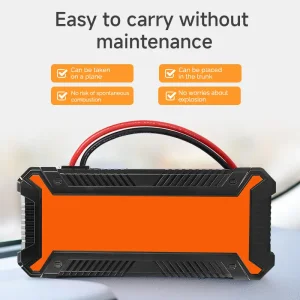
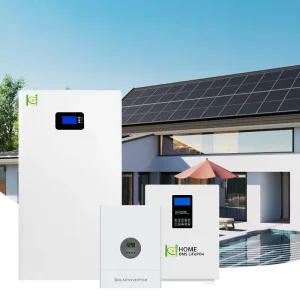
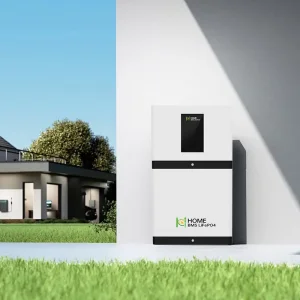
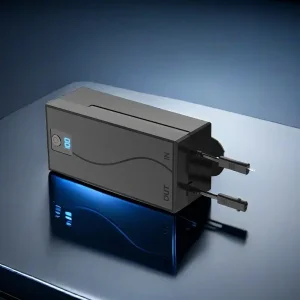
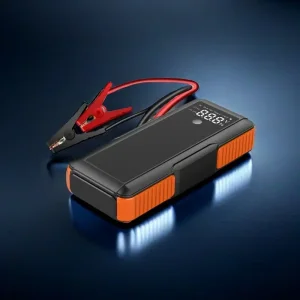
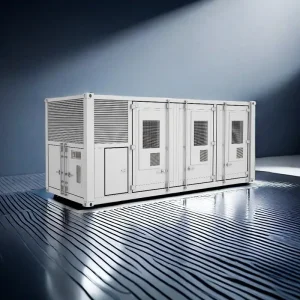
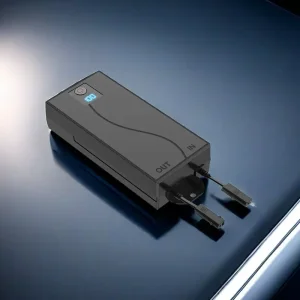
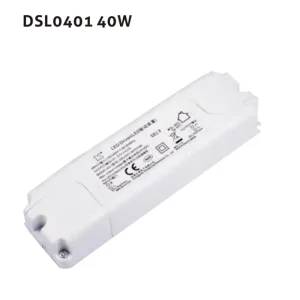
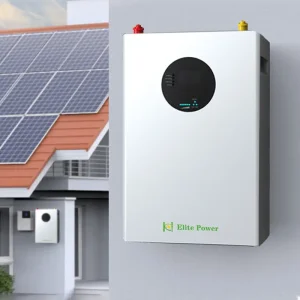
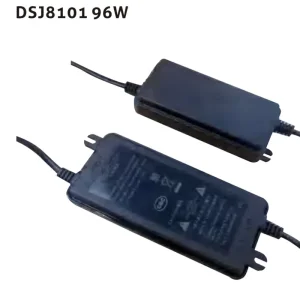
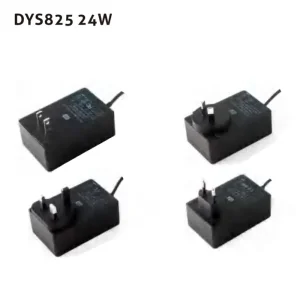
High-quality configurations from our industrial lines, including supercapacitors, storage systems, and battery solutions.
A comprehensive examination of off-grid regulatory systems and modern power architecture.
In the rapidly transforming domain of global renewable infrastructure, the solar charge controller acts as the central sentinel, regulating the chaotic, environmental inputs of photovoltaic (PV) panels to safe, usable DC levels for energy storage matrices. Among these technologies, the Pulse Width Modulation (PWM) solar charge controller represents a highly mature, reliable, and cost-effective topology. While Maximum Power Point Tracking (MPPT) occupies the conversation for larger, utility-scale operations, PWM remains the undisputed workhorse for a vast array of specialized commercial, industrial, and residential setups worldwide.
Globally, the commercial relevance of PWM technology has experienced a resurgence due to the explosion of microgrids, IoT-enabled rural telecom towers, street lighting networks, and specialized marine/vehicular backup power systems. B2B procurement managers recognize that for systems where the solar panel voltage matches the battery pack voltage (e.g., 12V solar panels charging a 12V battery system), PWM offers conversion efficiencies approaching 90-95% at a fraction of the capital expenditure of MPPT alternatives.
High-quality PWM solar regulators do not merely connect solar arrays directly to batteries. They employ advanced electronic switching and multi-stage battery charging algorithms to prevent degradation. A standard industrial PWM controller executes three distinct charging stages:
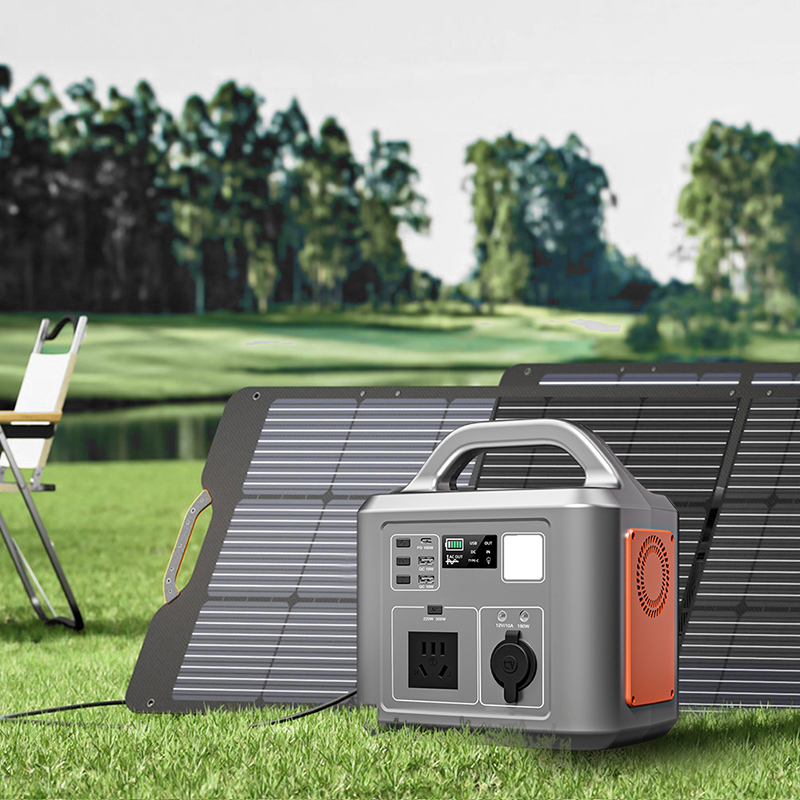
ELITE POWER is a proud subsidiary of GRACE DEVELOPERS CO., LIMITED. With strategically positioned branches in Hong Kong, Shenzhen, and Dongguan, China, we operate at the heart of the world’s most advanced electronics manufacturing cluster. As a modern new energy enterprise, we integrate cutting-edge scientific research, custom industrial design, premium manufacturing, and global sales channels under one banner.
We are dedicated to delivering intelligent, green, new energy storage solutions. Our product footprint is vast, catering to residential, industrial, and commercial demands. Our core portfolio spans home energy storage solutions, commercial storage containers, portable power stations, supercapacitor jump starters, truck lithium batteries, furniture batteries, and high-reliability solar charge regulation systems.
By positioning our administrative, design, and manufacturing divisions within Hong Kong, Shenzhen, and Dongguan, we leverage unmatched supply chain advantages, allowing us to source grade-A components, conduct extreme stress testing, and deliver cost-efficient products directly to international ports.
Unmatched quality management systems, international partnerships, and strict compliance.
At ELITE POWER, quality is not a variable parameter; it is a foundational pillar. We have successfully achieved and maintained ISO 9001:2015 (Quality Management System) and ISO 14001:2015 (Environmental Management System) certifications. These standards verify that every PWM solar charge controller, battery pack, and power station leaving our production line has undergone strict quality gates.
In 2022, we solidified our international market presence by signing a strategic cooperation agreement with leading USA partners. This alliance was designed to comprehensively develop the optical storage and charging system market across North America. We continue to supply home energy storage, industrial battery modules, heavy truck parking batteries, and emergency activation systems, demonstrating our technical capability to meet the strict standards of the Western hemisphere.


How Dongguan and Shenzhen drive innovation, cost reduction, and quality consistency.
The manufacturing cluster of Shenzhen and Dongguan, where ELITE POWER operates, is globally recognized as the epicenter of advanced power electronics. Sourcing high-quality PWM controllers from this region provides buyers with three distinct structural advantages:
In Dongguan and Shenzhen, every step of the supply chain is highly concentrated. SMT (Surface Mount Technology) facilities, high-grade semiconductor distributors, copper winding suppliers, and casing manufacturers operate within a 50-kilometer radius. This proximity reduces transit times and allows our engineering team to swiftly prototype and execute custom ODM/OEM designs, significantly accelerating time-to-market.
Modern Chinese manufacturing facilities rely on automation to ensure consistency. ELITE POWER utilizes high-precision automated optical inspection (AOI), automated test equipment (ATE), and temperature-controlled burn-in chambers. By subjecting our PWM solar charge controllers to continuous thermal stressing under full load, we identify and weed out infant component mortality before shipping.
| Specification Parameter | Industrial Standard Range | ELITE POWER PWM Standard | Buyer Benefit |
|---|---|---|---|
| System Voltage | 12V / 24V Auto-Select | 12V / 24V / 48V Adaptive | High flexibility across various battery chemistries |
| Rated Charge Current | 10A - 30A | 10A - 60A Heavy-Duty | Compatible with larger parallel solar panel arrays |
| No-load Loss | ≤ 15 mA | ≤ 8 mA (Ultra-low) | Conserves energy during dark/cloudy periods |
| Operating Temperature | -20°C to +50°C | -35°C to +65°C (Industrial) | Reliable deployment in extreme climates |
| Casing Rating | IP20 / IP30 | IP32 to IP67 Optional | High dust and water spray protection |
Our PWM solar charge controllers are deployed across a wide range of global applications:
Navigating changing technologies, smart features, and sustainability demands.
For procurement officers, sourcing solar controllers involves balancing cost, reliability, and modern compliance. As the global renewable market shifts, several key procurement requirements have emerged:
Modern off-grid systems require remote monitoring. B2B buyers now look for PWM controllers equipped with RS485 communication ports utilizing Modbus protocols. This allows operators to check battery SoC, historical charge cycles, and real-time temperatures via mobile apps or centralized desktop software.
With Lithium Iron Phosphate (LiFePO4) batteries increasingly replacing Lead-Acid, PWM regulators must adapt. High-quality manufacturers provide customizable charge profiles that allow users to define specific absorption voltages, over-voltage disconnect points, and low-temperature charging cut-offs crucial for lithium cells.
Technical answers for solar developers, distributors, and procurement teams.
A PWM controller acts as a direct switch connecting solar panels to the battery. It is most efficient when the nominal voltage of the solar panel matches that of the battery (e.g. 12V panel to 12V battery). An MPPT controller can step down higher solar voltages to charge lower-voltage battery banks, maximizing efficiency in larger, high-voltage systems. Choose PWM for smaller systems (under 400W), applications requiring ultra-low radio noise, and cost-constrained deployments.
Battery chemistry is temperature-dependent. At lower temperatures, internal battery resistance rises, requiring a higher voltage to achieve a full charge. Conversely, at higher temperatures, overcharging risk increases. A high-quality PWM controller uses a temperature probe to adjust the charging voltage setpoints (typically -3 to -5mV/°C/Cell), preventing thermal runaway and extending battery life.
Yes. Backed by GRACE DEVELOPERS CO., LIMITED, our engineering teams in Shenzhen and Dongguan provide full OEM/ODM services. This includes custom casing branding, private label PCB layouts, modified voltage profiles, specialized LCD screens, and bespoke communication modules to suit specific industrial configurations.
Our manufacturing centers operate under ISO 9001:2015 and ISO 14001:2015. Depending on the product family, our equipment is certified to meet CE, RoHS, FCC, and UL requirements, facilitating smooth importing processes across North America, Europe, and Asia-Pacific markets.
Complete your renewable and backup power systems with our reliable components.
 ELITE POWER