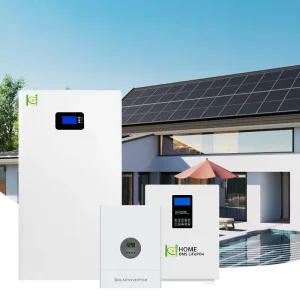
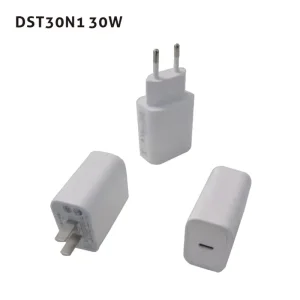
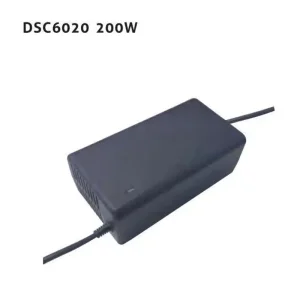
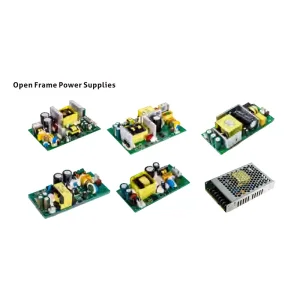
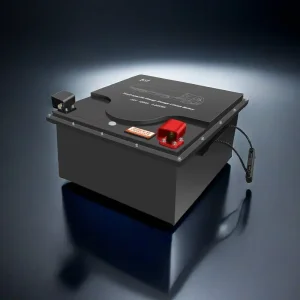
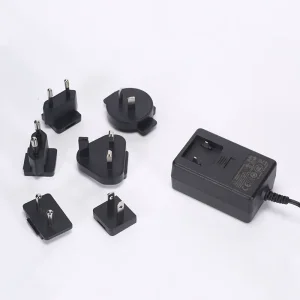
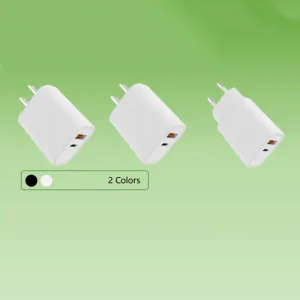
Explore our top-tier manufacturing solutions spanning smart energy systems, desktop battery chargers, and specialized power supplies designed to work seamlessly with advanced USB Type-C architectures.
As the world migrates toward standardizing all power connections under the USB-C protocol, it is essential to understand the engineering parameters that differentiate cheap consumer cords from high-reliability commercial links.
Modern fast charging relies on USB Power Delivery (PD) protocols, specifically PD 3.0 and PD 3.1 Extended Power Range (EPR). Where standard cables carry up to 3A of current at 20V (60W), next-generation fast charging requires handling up to 5A at 48V (240W). To ensure system safety, low resistance, and structural integrity, industrial-grade OEM C-Type cables incorporate three major structural layers:
Electronic Marker chips communicate with host chargers and sink devices. They advertise current limits, voltage profiles, and manufacturer ID. For any connection delivering more than 60W (3A), an E-Marker is legally required under USB-IF guidelines to prevent thermal runaway.
High-current cables utilize thicker American Wire Gauge (AWG) cores, typically 22AWG/20AWG for power lines and 30AWG/32AWG for signal transmission. Tinned oxygen-free copper (OFC) prevents internal voltage drops (IR drop) over longer distances.
High-speed power lines induce electromagnetic interference (EMI). High-density aluminum foil, braided tinned copper meshes, and Kevlar fiber reinforcement shield data lines, maintaining connection integrity even during concurrent high-wattage charging.
| Cable Profile | Max Current | Max Voltage | Max Wattage | E-Marker Requirement | Target Applications |
|---|---|---|---|---|---|
| USB-PD 2.0 Standard | 3.0 Amps | 20 Volts | 60 Watts | Optional (Not Required) | Smartphones, Tablets, Basic Accessories |
| USB-PD 3.0 High-Power | 5.0 Amps | 20 Volts | 100 Watts | Mandatory (Required) | Laptops, Portable Power Stations, Smart Displays |
| USB-PD 3.1 Extended Range (EPR) | 5.0 Amps | 48 Volts | 240 Watts | Mandatory (EPR Specific E-Marker) | Industrial Tools, Heavy Laptops, Outdoor Storage Systems |
Over 90% of the world's high-performance USB cables are sourced from the Pearl River Delta. This dominance is not simply about labor cost—it is driven by an unparalleled manufacturing ecosystem.
Located in Hong Kong, Shenzhen, and Dongguan, companies like Grace Developers Co., Limited (operating under Elite Power) have integrated raw component sourcing, advanced precision tooling, dynamic test labs, and global logistics under one localized umbrella. This industrial concentration yields several key advantages for B2B buyers:
USB Type-C is no longer just for charging consumer smartphones. High-speed fast charging technology serves as the backbone for diverse macro-level industries.
Outdoor sensors, telemetry units, and field computers require ruggedized USB-C connections that can withstand vibrations, extreme temperatures, and moisture. Our OEM solutions include custom silicone jackets and screw-locking Type-C terminals that prevent accidental disconnection under high-vibration scenarios.
Medical monitoring carts and handheld diagnostic devices require isolation layers and reliable power delivery. The combination of high-density copper cabling with medical power adapters guarantees low electrical noise (low ripple voltage) and adheres to IEC 60601-1 standards.
Integrating high-output C-Type charging networks inside heavy trucks and commercial fleets provides fast power to tablets, navigation screens, and communication instruments. Using specialized 12V/24V step-down adapters linked with custom Type-C assemblies ensures stable power delivery even during engine crank cycles.
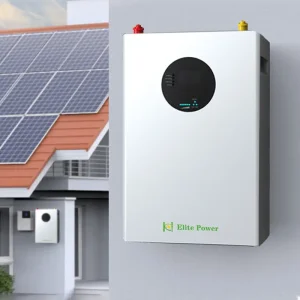
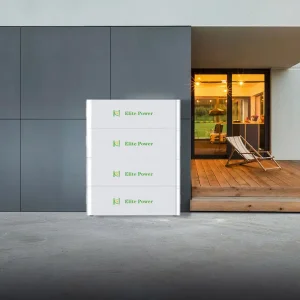
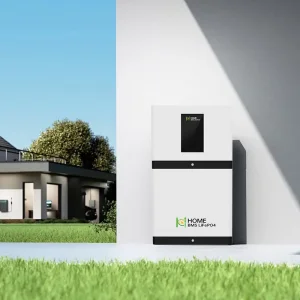
As micro-grids, solar storage systems, and home batteries become mainstream, USB-C is evolving into a standardized output interface. Power storage systems output direct DC power through 100W/240W Type-C ports, bypassing AC-to-DC conversion losses and increasing overall energy efficiency by up to 15%.
Purchasing USB-C cabling at scale requires an audit process that extends far beyond price per unit. Enterprises must look for systemic compliance and materials certification.
When sourcing OEM C-Type fast charging cables, procurement teams should evaluate suppliers on the following critical benchmarks:
Verify that the manufacturer holds certifications including USB-IF compliance, CE, FCC, RoHS, and REACH. For North American deployments, UL/cUL (UL9990 standard specifically for power cables) is crucial for fire safety and legal compliance.
Active auditing under ISO 9001:2015 guarantees systematic quality control at every phase of assembly, while ISO 14001:2015 shows commitment to minimizing environmental impact through proper waste management.
Stable supplier relationships, backup sourcing protocols for silicon chips (E-Marker controllers), and strong freight forwarder contracts ensure deliveries remain on schedule, shielding clients from port bottlenecks or custom delays.
The industry is transitioning toward 140W (28V/5A) and 240W (48V/5A) USB-C ecosystems. Devices like high-end workstations, e-bikes, robotic equipment, and laser projectors are abandoning bulky custom DC barrel jacks in favor of standardized EPR-rated Type-C cables. Sourcing these high-voltage links requires specialized insulating polymers, longer strain relief (SR) sleeves to distribute structural tension, and enhanced internal isolation layers to avoid cross-talk and short circuits.
ELITE POWER is a proud subsidiary of GRACE DEVELOPERS CO., LIMITED. With strategically positioned branches in Hong Kong, Shenzhen, and Dongguan, China, we operate at the heart of the global electronics and green energy manufacturing corridor. As a comprehensive, forward-looking enterprise integrating scientific research, product design, precise manufacturing, and global sales, we focus on intelligent green energy solutions and high-efficiency power delivery systems.
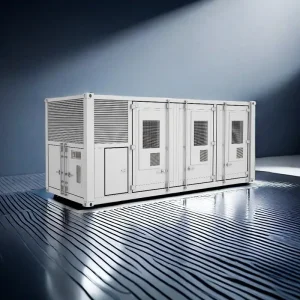
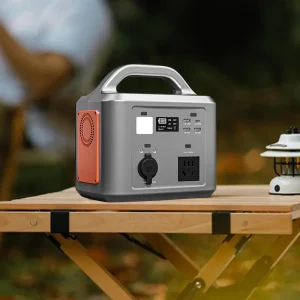
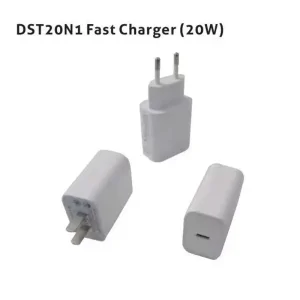
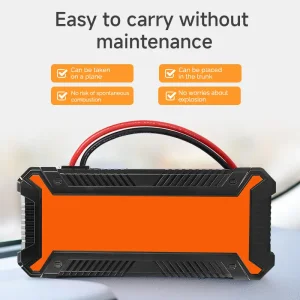
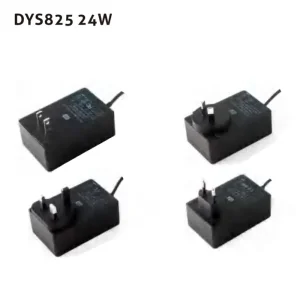
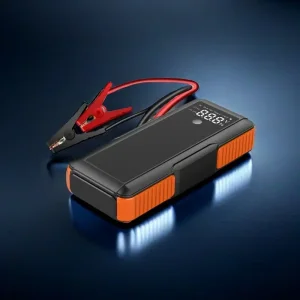
Our diversified product lineup ranges from residential household energy storage systems and industrial cabinets to portable power stations, heavy truck lithium batteries, supercapacitor car starters, desktop fast chargers, and smart interconnect accessories. By combining our energy storage expertise with state-of-the-art power delivery designs, we build a seamless, secure energy flow from source to device.
We have obtained ISO:9001:2015 and ISO14001:2015 quality management system and environmental management system certifications. In 2022, we signed a strategic cooperation agreement with USA partners: to comprehensively develop the optical storage and charging system market in the US market, and to supply products such as home energy storage system, industrial and commercial energy storage, and at the same time, in heavy truck parking batteries, In-depth cooperation in emergency activation and other fields.

We operate with honesty and transparency in all our business dealings.

We are committed to pushing the boundaries of renewable energy technology to create a greener future.

We strive for everything we do from product development to customer service.

We believe that teamwork and partnership are most important for partners.
Get answers to critical technical questions regarding high-power USB C-Type charging cables, safety integrations, and custom ODM manufacturing.
Under the USB-IF specification, standard non-chipped cables are capped at a maximum of 3A at 20V (60W) to ensure safety. If a device attempts to pull higher currents (such as 5A for 100W or 240W laptops or power stations) through a standard cable, it can cause the thin conductors to overheat, posing a fire risk. The E-Marker (Electronic Marker) chip acts as an ID card, telling the charger and the connected device that the cable contains heavier gauge copper cores and is certified to handle 5A safely. Without an E-Marker, the charging source will automatically throttle the power down to 60W or lower.
As cable length increases, internal electrical resistance also rises, resulting in a voltage drop (known as IR drop). For fast charging to remain efficient, this voltage drop must be minimized. Our OEM factories counter this phenomenon by using thicker wire gauges (reducing AWG size) for longer runs. For example, while a 1-meter cable might use 24AWG for its power lines, a 3-meter fast-charging cable will utilize 20AWG or even 18AWG pure tinned copper, alongside fine-tuned E-Marker programming, to deliver the target voltage securely at the terminal.
For standard office use, PVC is cost-effective, while TPE (Thermoplastic Elastomer) is favored for its flexibility and eco-friendliness. However, for industrial, medical, or ruggedized outdoor environments, we recommend double-braided nylon or high-durability liquid silicone. These materials offer superior resistance to abrasion, UV radiation, chemical exposure, and micro-cracking at low temperatures, ensuring a long lifecycle under strenuous use.
Yes. USB Type-C is designed to support both power delivery and high-speed data multiplexing. We can customize cables based on specific requirements, ranging from USB 2.0 (480 Mbps data, optimized primarily for charging) up to USB 3.2 Gen 2x2 (20 Gbps) and USB4 (40 Gbps), which allow simultaneous 100W/240W power delivery and multi-stream high-definition video output.
Our facilities implement a multi-stage Quality Management System. We run automatic testing on 100% of raw E-Marker ICs, use automated high-frequency laser soldering machines to eliminate manual welding variances, perform rigorous injection mold checkouts, and run end-to-end computerized circuit testing on every cable before final packaging. This process maintains our defect rate well below the industry standard of 0.05%.
High-power density solutions ranging from stackable home energy cabinets to specialized medical-grade adapters and heavy vehicle jump starters.
 ELITE POWER