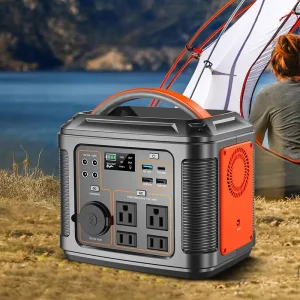
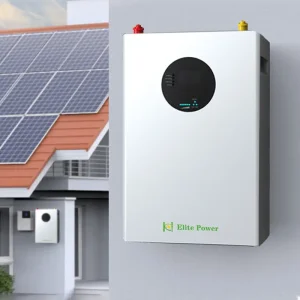
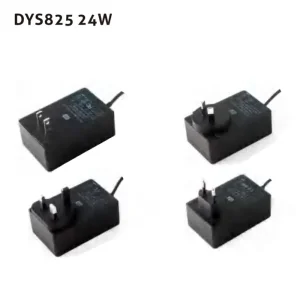
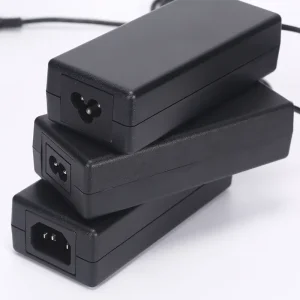
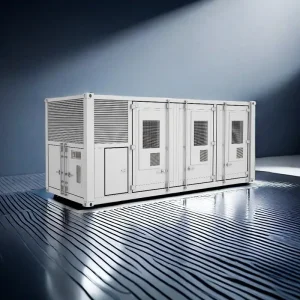
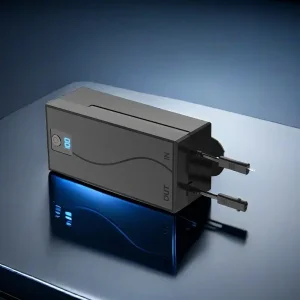
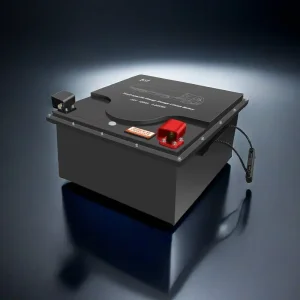
Explore our premium range of industrial power conversion systems, medical-grade components, and home energy storage solutions engineering for heavy duty applications.
The core catalyst for modern heavy machinery, commercial logistics, and e-mobility applications.
The global market for On-Board Battery Chargers (OBC) is experiencing unprecedented growth, driven by a rapid structural shift toward electrification in industrial logistics, marine systems, construction equipment, and utility vehicle fleets. An On-Board Charger acts as the vital bridge converting alternating current (AC) from utility grids into direct current (DC) optimized for the vehicle’s high-voltage traction battery pack.
Today's smart grids and multi-megawatt fleets require OBC designs that minimize charging times while maximizing energy efficiency. Transitioning away from legacy, bulky silicon-based architectures, modern industrial systems utilize advanced topologies like Silicon Carbide (SiC) and Gallium Nitride (GaN) power switches. This tech evolution yields power conversion systems capable of running at over 96% efficiency, significantly cutting down on operational overheads and lowering the total cost of ownership (TCO) for commercial fleets worldwide.
"As global distribution networks pivot to zero-emission infrastructure, the reliance on ruggedized, high-frequency, and digitally controlled on-board power supplies becomes non-negotiable for system designers."
Utilizing SiC (Silicon Carbide) MOSFETs to minimize switching losses by up to 60%, drastically reducing the heat footprint and allowing for ultra-compact enclosures.
Sealed up to IP67 ingress protection ratings to withstand high-vibration off-road applications, marine saline humidity, and corrosive chemical environments.
A deep dive into high-frequency topology, thermal management protocols, and advanced functional safety loops.
Features an interleaved Active Power Factor Correction circuit that achieves a displacement power factor of >0.99. This lowers the AC mains peak currents, reduces ripple currents on the input bulk capacitors, and prevents harmonic noise from distorting local grid feeds.
Utilizes a zero-voltage switching (ZVS) LLC resonant converter that provides continuous galvanic isolation between the AC utility line and the high-voltage battery pack, protecting downstream systems from grid surges and spikes.
Incorporates an optimized cooling plate design (supporting liquid-to-coolant loops or forced air) to guarantee thermal equilibrium under continuous peak loads up to 65°C ambient temperatures, preventing thermal derating.
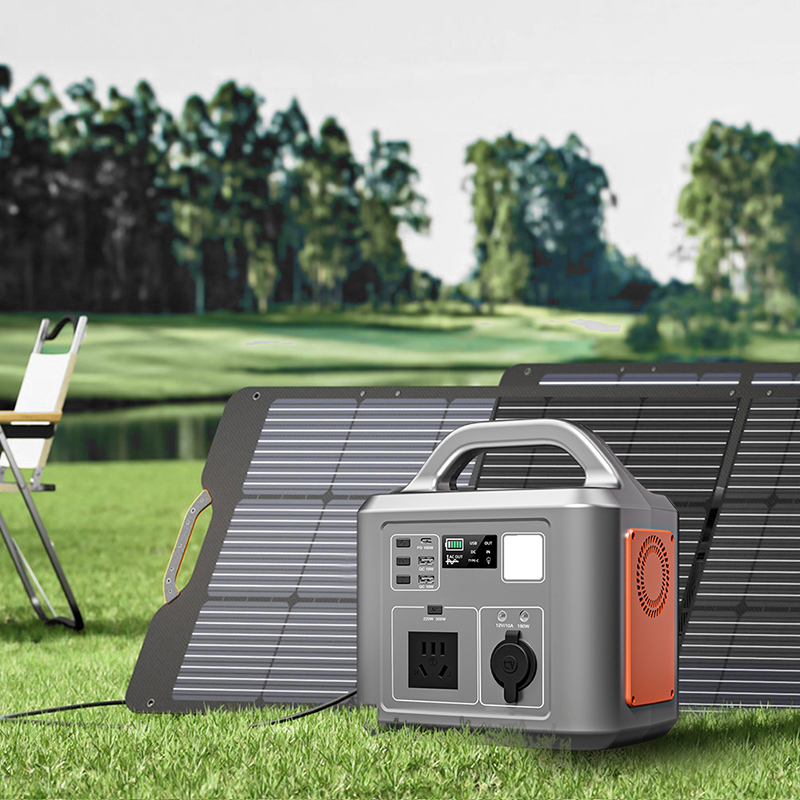
ELITE POWER is a subsidiary of GRACE DEVELOPERS CO., LIMITED. With key physical branches operating in Hong Kong, Shenzhen, and Dongguan, China, we are strategically positioned at the epicentre of the world’s advanced battery technology and hardware supply chain.
As a vertically integrated new energy production enterprise, we seamlessly combine advanced scientific research, mechanical design, raw material manufacturing, and global sales. We specialize in intelligent green energy systems, manufacturing everything from utility-scale container energy storage and truck-specific lithium-ion systems to highly customized, heavy-duty on-board power conversion and charging architectures.
To ensure global trust and compliance, our operations are certified under the rigorous ISO:9001:2015 quality management standard and ISO14001:2015 environmental management system. We do not just build chargers; we design compliant systems certified to meet UL, CE, FCC, and RoHS standards.
In 2022, ELITE POWER signed a long-term strategic cooperation agreement with tier-1 partners in the United States. This partnership focuses on co-developing integrated optical storage, dynamic EV charging systems, heavy truck auxiliary power units, and emergency vehicle activation solutions to meet the demands of the North American commercial market.
Manufacturing in our state-of-the-art Chinese factories in Dongguan and Shenzhen allows us to deliver substantial cost-efficiency and supply chain stability. We source raw materials locally to insulate our production lines from global component shortages. This vertical integration allows us to pass down substantial cost-efficiency benefits to our OEM/ODM partners, ensuring shorter lead times, precision quality control, and rapid custom design cycles.

We operate with absolute honesty and transparency in all our business dealings.

Committed to pushing the boundaries of renewable energy technology for a greener future.

We strive for perfection in everything we do, from product development to customer service.

We believe that teamwork and true partnership are the keys to long-term mutual growth.
Engineered for high performance across diverse operating conditions, from standard warehouse floors to heavy-duty logistics corridors.
With automated warehouses operating around the clock, on-board chargers for forklifts and automated guided vehicles must handle rapid opportunity charging cycles. Our OBCs communicate directly with fleet management software via CAN-bus to schedule charges during idle periods.
Salt mist, humidity, and constant motion demand corrosion-resistant, liquid-cooled, and hermetically sealed chargers. Elite Power's OBC series features coated internal power electronics to withstand marine environments while maintaining charging efficiency.
Long-haul trucks require robust energy storage systems and smart chargers that interface with auxiliary power units. Our systems manage the transition between alternator power and overnight battery operation, reducing engine idling and saving fuel.
A strategic blueprint for operations managers, battery pack integrators, and product sourcing directors.
Procurement teams sourcing industrial-grade chargers must look beyond unit price to evaluate long-term reliability. Key specifications include:
The industry is moving toward bi-directional charging (V2G/V2X). Future industrial fleets will act as distributed grid batteries, supplying power back to local grids during peak pricing. The adoption of wide-bandgap (SiC/GaN) switches will also enable the shift from standard 400V battery architectures to 800V and higher, halving charging times without increasing cable weight.
At Elite Power, we integrate these trends into our research and development pipelines. Our next-generation systems feature adaptive charging curves that automatically adjust current based on real-time cell temperatures, prolonging battery life by up to 20%.
Expert answers to the most common engineering and procurement questions regarding on-board battery charging technology.
Explore our industrial chargers, backup energy systems, and high-frequency power supplies for commercial applications.
 ELITE POWER