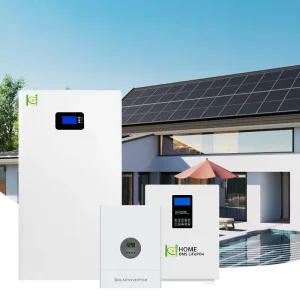
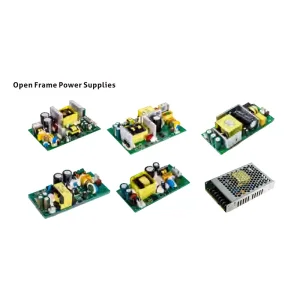
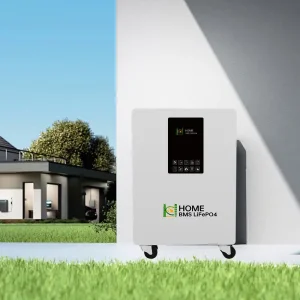
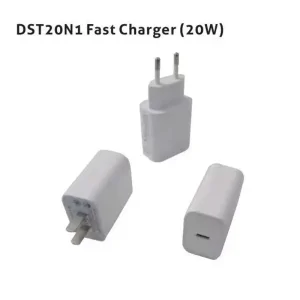
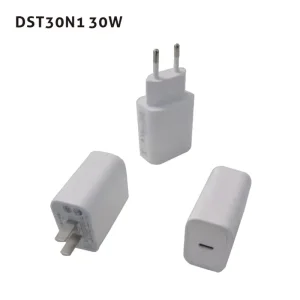
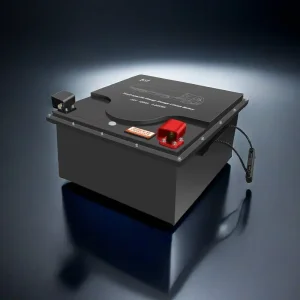
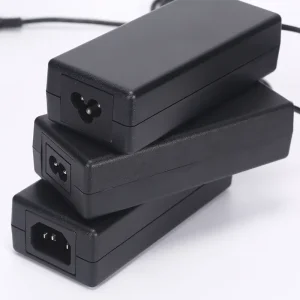
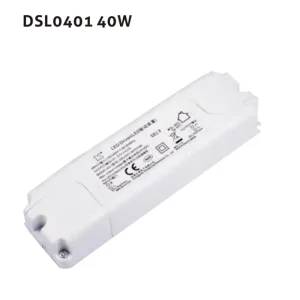
Premium solar power accessories, power modules, and localized energy storage assemblies developed under rigorous quality standards.
Why modern PV installations require intelligent peak power tracking controllers for commercial scale performance.
Maximum Power Point Tracking (MPPT) solar charge controllers are the cornerstone of high-performance off-grid and hybrid photovoltaic systems. Unlike legacy Pulse Width Modulation (PWM) technology, which forces the solar array to operate at the battery's nominal voltage, an MPPT controller continuously analyzes the panel array's voltage and current outputs. By utilizing high-frequency DC-to-DC conversion, it adjusts the input operational voltage to locate the absolute dynamic peak power point (Vmp) of the solar modules.
Our OEM MPPT platforms deliver an industry-leading tracking efficiency rating of 99.5% and a peak conversion efficiency of up to 98%. By decoupling the solar array voltage from the battery chemistry voltage, system designers are empowered to chain solar modules in high-voltage series strings. This architectural change directly reduces resistive cabling losses ($I^2R$), decreases balance-of-system (BOS) cost, and enhances system performance during low-light conditions.

Deploying solar-plus-storage platforms at industrial scale to combat rising transmission tariffs and secure system resilience.
Deploying energy systems in remote regions requires high-voltage off-grid MPPT designs. By regulating erratic solar profiles, our controllers ensure stable power supply for sensitive 5G base stations, microwave repeaters, and military border posts.
For commercial facilities, high energy demand charges can make operation costs skyrocket. Integrating high-amperage MPPT solar charge controllers with battery storage facilities allows companies to store solar energy during non-peak times and discharge it during peak times.
Integrating EV charger technology with clean PV energy requires robust DC link systems. Our custom MPPT tracking protocols feed direct DC energy to battery stacks, minimizing AC-to-DC conversion losses for transport infrastructure.
A detailed comparison highlighting the conversion metrics, operating voltage windows, and thermal management capabilities.
| Performance Metrics | Legacy PWM Controllers | Standard Commercial MPPT | ELITE POWER Industrial MPPT |
|---|---|---|---|
| PV Tracking Efficiency | N/A (No active tracking) | 95.0% - 97.5% | 99.5% - 99.8% |
| Power Conversion Stage | 70% - 75% Direct Connect | 88% - 93% Buck Rectifier | 96% - 98.2% Sync-Rectification |
| Maximum PV Input Voltage | Equal to battery voltage limit | 100V - 150V DC | 150V - 250V DC High-Voltage Topology |
| Thermal Dissipation | Passive heatsink only | Standard convection cooling | Intelligent thermal design (die-cast fins & fan) |
| Battery Chemistry Support | Lead-Acid Only (AGM/Gel) | Standard Lithium & Lead-Acid | Fully programmable parameters & custom LiFePO4 BMS |
Bridging industrial manufacturing capacity with high-end global distribution networks across Hong Kong, Shenzhen, and Dongguan, China.
ELITE POWER, operating as a key subsidiary of GRACE DEVELOPERS CO., LIMITED, is a vertically integrated new energy production enterprise. By combining scientific research, structural design, automated manufacturing, and domestic & international sales networks, we supply customized green energy solutions to the most demanding industrial sectors.
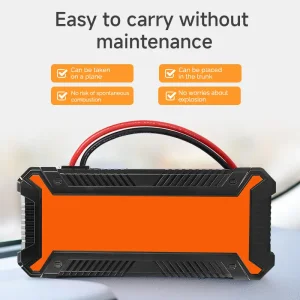
Our operational framework spans branches in Hong Kong, Shenzhen, and Dongguan, locating our R&D center in the heart of China's high-tech manufacturing capital. In 2022, we took a step forward by signing a long-term strategic partnership agreement with prominent USA partners. This venture was formed to develop and supply home energy systems, industrial scale microgrids, and portable battery modules. Additionally, it targets commercial heavy truck parking batteries and backup power management systems.
From remote high-altitude cold zones to standard metropolitan EV infrastructure—providing clean, stable electricity.
Features transient surge suppression and remote SNMP diagnostic monitors. Perfect for operating unmanned base stations without utility grid access.
Integrated with truck LiFePO4 starter setups. Allows auxiliary cabin elements to run off small solar arrays, extending battery cycle life and preventing complete battery drain.
High-voltage inputs run directly to industrial multi-MW container networks. This minimizes complex transformer interfaces and maximizes system response times.
Controls solar panels to feed off-grid stackable domestic storage units. Safely manages multi-phase battery charging without causing overcharging issues.
Our advanced production facilities follow international environmental regulations and strict quality inspection procedures.
To meet the standards of the US and EU markets, all solar charge controllers undergo automated optical inspection (AOI), multi-point in-circuit tests (ICT), and functional load tests. We source automotive-grade electronic components, high-temperature electrolytic capacitors, and premium microprocessors. This ensures our controllers can run reliably for up to 10 years in environments with ambient temperatures ranging from -30°C to 60°C.
By using multi-phase synchronous rectification technology, we keep power loss in the controller's power stage to a minimum. This allows the system to run efficiently even in high temperatures without having to throttle back its charge capacity.
The core operating values that guide our customer service, engineering R&D, and global partnerships.

We operate with honesty and transparency in all our business dealings. We deliver clear technical documentation, accurate battery capacity metrics, and straightforward warranties.

We are committed to pushing the boundaries of renewable energy technology. We focus on developing new smart solar and storage technologies for a greener future.

We strive for excellence in everything we do. This focus ranges from our hardware engineering and software development to our production lines and aftermarket support.

We believe that teamwork and strong partnerships are the keys to long-term success. We focus on growing and thriving alongside our global OEM and ODM distributors.
Transitioning to Wide-Bandgap Semiconductors and Cloud-Connected Diagnostics.
The solar charger market is shifting toward higher system voltages, quicker response speeds, and smart grid connectivity. To stay ahead of these trends, our engineering department is implementing three major updates across our MPPT charge controller products:
Answers to common technical, design, and purchasing questions about our MPPT systems.
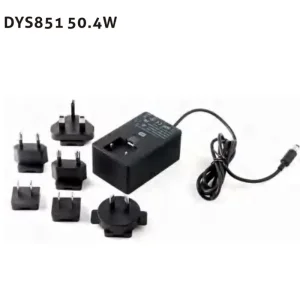
Industrial-grade components, LED drivers, medical equipment chargers, and energy storage options built to comply with international safety standards.

 ELITE POWER