Pioneering energy infrastructure, medical power interfaces, and high-performance commercial-grade charging equipment built to international technical specs.
Understanding the shift in charging efficiency, chip communication protocols, and mechanical requirements for heavy-duty industrial and standard consumer applications.
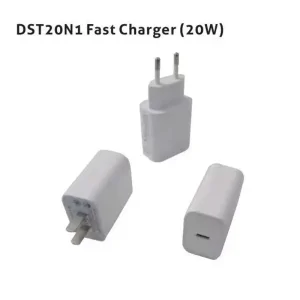
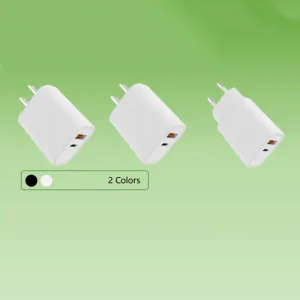
In modern industrial and commercial landscapes, the hardware architecture of a USB C Android Charger has transitioned from simple voltage regulators to highly integrated microcontrollers running complex handshake sequences. With the advent of the USB-PD (Power Delivery) 3.0 & 3.1 standards, charging protocols dynamically adjust output profiles between 5V, 9V, 12V, 15V, and 20V, scaling up to 140W and 240W configurations. This rapid communication prevents thermal stress, extends device battery lifespan, and enables a single adapter to source current efficiently across smartphones, industrial scanners, IoT hubs, and stackable home battery packs.
For procurement professionals, identifying a qualified OEM USB C Android charger manufacturer is critical. Modern hardware designs incorporate Gallium Nitride (GaN) transistors, replacing silicon components to reduce form factors by 40% while maintaining operational efficiency exceeding 94%. By leveraging PPS (Programmable Power Supply) capabilities, modern adapters adjust output voltages in minute 20mV steps based on active feedback loops from the receiving mobile device's BMS (Battery Management System). These safety features allow the modern hardware stack to stay robust under grueling operations.
Unlike fixed-voltage chargers, PPS adapters regulate voltage and current values dynamically. This virtually eliminates conversion efficiency losses inside the Android device, meaning significantly lower internal heat generation and extended device lifespan—a critical factor for enterprise devices on continuous shifts.
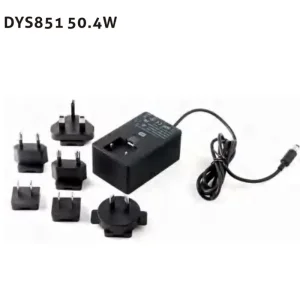
Comprehensive structural parameters of standard wall plugs, industrial PD interfaces, and multi-port charging platforms.
| Output Profile | Core Topology | Efficiency Grade | Dynamic Negotiations | Thermal Safeguards | Key Certifications |
|---|---|---|---|---|---|
| 20W / 30W PD | Silicon / GaN Hybrid | DoE Level VI / CoC Tier 2 | PD 3.0, QC 4+, PPS | Over-temp protection (OTP) | CE, FCC, UL, CB, CCC |
| 45W / 65W PD | GaN Fast Charging Technology | 92% Efficiency Rating | PD 3.0, PPS (3.3V-11V) | Dual Thermistor Sensor | UL 62368-1, PSE, UKCA |
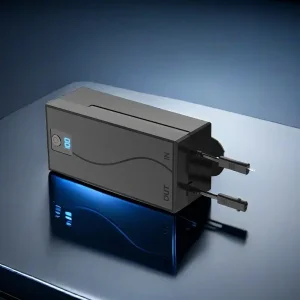
| 100W+ GaN Multi-Port | GaN Integrated IC Stack | 94% Efficiency Rating | PD 3.1, PPS, Custom Profiles | NTC Thermal Regulation | FCC Part 15, RoHS, CB |
How high-performance USB-C technology powers specific sectors across global hubs.
Medical power interfaces require rigorous isolation barriers. Our wall plug-in and desktop adapters meet the strict 2xMOPP (Means of Patient Protection) standards, providing galvanic isolation and extremely low leakage currents for portable monitors and rugged patient diagnostics tools.
Modern workplaces incorporate wall-mounted USB-C panels and hub displays. Using intelligent power distribution protocols, our multi-port modules divide energy outputs dynamically, keeping laptops, Android tablets, and local storage devices charged from single infrastructure drops.
Enterprise logistics relies heavily on robust data terminals and rugged handheld devices. With structural strain relief designs, our customized USB-C charging terminals endure thousands of mating cycles in dusty, demanding warehouse environments without connection failure.
How our manufacturing footprint in Shenzhen and Dongguan ensures premium lead times and absolute quality control.
The electronics manufacturing ecosystem of the Shenzhen-Hong Kong-Dongguan industrial corridor represents the world's most integrated and resilient component cluster. As a leading USB C Android charger supplier based in these hubs, Elite Power manages a vertically integrated logistics model. This allows us to source raw transformer components, high-grade semiconductor dies, and fire-resistant injection-molded casings directly from local suppliers within hours, dramatically shortening production turnarounds.
By using optimized manufacturing lanes, automated SMT (Surface Mount Technology) assembly lines, and multi-axis optical inspections (AOI), we achieve extremely low defect rates (DPMU < 100). Our proximity to major shipping hubs in Hong Kong and Yantian port guarantees streamlined logistics routing, helping us dispatch high-volume OEM/ODM projects across the globe on schedule.
 ELITE
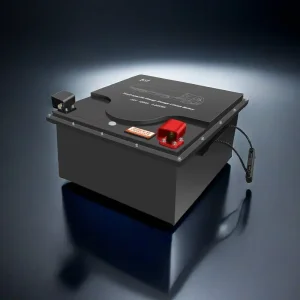
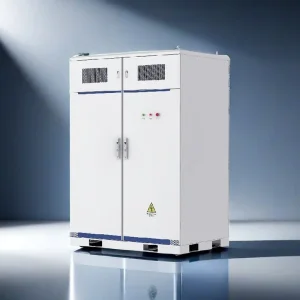
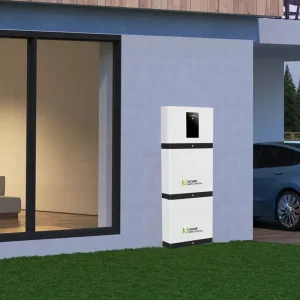
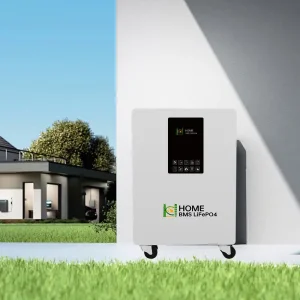
ELITEELITE POWER, It is a subsidiary of GRACE DEVELOPERS CO., LIMITED. We have branches in Hong Kong, Shenzhen and Dongguan, China. As a new energy production enterprise integrating scientific research, design, manufacturing and sales, we focus on intelligent green new energy storage solutions. Our products include household energy storage systems, industrial and commercial energy storage cabinets, energy storage containers, super capacitor jump starters, portable power stations, truck lithium batteries, furniture batteries, and so on.
By continually focusing on top-tier engineering standards and next-generation power architectures, we offer comprehensive OEM and ODM support. From small scale customized charger prototypes to mega-watt industrial storage interfaces, our production capacity ensures reliable quality across all products.
Committed to rigorous engineering quality and long-term global partnerships.

We operate with honesty and transparency in all our business dealings.

We are committed to pushing the boundaries of renewable energy technology to create a greener future.

We strive for excellence in everything we do, from product development to customer service.

We believe that teamwork and collaborative partnership are the ultimate foundation for mutual success.
Innovating high efficiency, green construction materials, and adaptive algorithms.
The USB-C platform is expanding beyond standard mobile terminals. As high-voltage protocols such as Extended Power Range (EPR) become standard, we will see chargers utilizing the full potential of 28V, 36V, and 48V outputs. As a forward-thinking OEM USB C Android charger factory, we are actively researching advanced GaN topologies to achieve power densities of 30W per cubic inch. This allows ultra-compact adapters to deliver energy levels formerly reserved for large-scale laptop charging bricks.
In addition to density improvements, environmental responsibility is shaping our technological path. We are expanding our production processes to incorporate post-consumer recycled (PCR) plastics for exterior casings and transitioning packaging to 100% biodegradable soy-ink based boxes. Our ongoing research into standby power draw (zero-load consumption) aims to push it below 30mW, aligning perfectly with stringent future global eco-design requirements.
Expert answers to compliance, technical configurations, and OEM manufacturing workflows.
Complementary industrial modules including LFP stop-and-exchange systems, high-efficiency furniture battery packs, and multi-port charging platforms.
 ELITE POWER