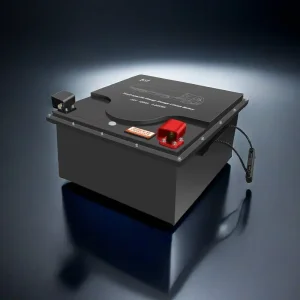
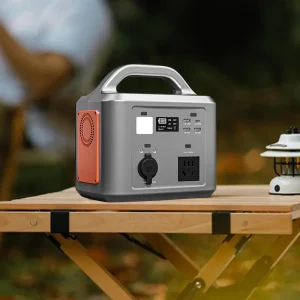
Discover our primary selection of auxiliary power units, modular smart-charging units, and driver-grade micro-power solutions deployed across Tri-State logistics terminals.
Navigating the regulatory landscape of the mid-Atlantic and northeastern shipping hubs requires transition from engine-idling to high-density auxiliary electric storage systems.
The state of New York, serving as the critical logistics gateway for the Northeast corridor, is enforcing some of the strictest zero-emission guidelines in the Western Hemisphere. Under the New York State Anti-Idling Law (6 NYCRR Subpart 217-3), heavy-duty diesel vehicles are strictly prohibited from idling for more than 5 consecutive minutes. Within municipal boundaries, such as New York City, regulations are even more aggressive: NYC Administrative Code § 24-163 reduces this limit to just 3 minutes, or a mere 1 minute when adjacent to a school zone. Fines can reach up to $2,000 per violation, and citizen-enforced bounty programs have turned idling compliance into a significant balance-sheet liability for long-haul carriers.
Additionally, critical transportation arteries like the Hunts Point Cooperative Market in the Bronx, the JFK International Airport cargo lanes, and the Port Authority of NY & NJ terminals handle thousands of refrigerated containers and heavy sleeper trucks daily. Fleet managers are pressured by the Climate Leadership and Community Protection Act (CLCPA) to achieve rapid electrification targets. High-capacity, truck-integrated lithium parking batteries present the only viable mechanism to maintain overnight driver cabin air conditioning (AC) and vehicle diagnostics without running diesel main engines or combustion Auxiliary Power Units (APUs).
Standard lead-acid batteries cannot satisfy the continuous high-current draws of modern electric HVAC systems during extended 10-hour federally mandated driver rest breaks. Our specialized LiFePO4 parking AC batteries provide direct operational relief:
Understanding why Lithium Iron Phosphate (LiFePO4) is replacing lead-acid, AGM, and alternative chemistries across heavy commercial trucking networks globally.
Unlike standard ternary NCM chemistries, LiFePO4 displays an exceptionally high thermal runaway threshold (>600°C). This makes it safe for positioning inside sleeper-cab toolboxes or structural frames, protecting drivers and valuable assets.
While traditional deep-cycle AGM batteries degrade to 50% capacity within 400-500 charge-discharge cycles under heavy AC draws, our advanced LiFePO4 cells maintain over 80% State of Health (SoH) after 4,000+ deep cycles (100% DoD).
By eliminating excessive fuel consumption from idling (which averages 0.8 to 1.2 gallons of diesel per hour) and mitigating the early failure rates of lead-acid blocks, fleet owners achieve complete ROI within 12 to 14 months of deployment.
| Performance Indicator | Traditional Lead-Acid / AGM Battery Pack | Elite Power LiFePO4 Truck AC Battery | Diesel Generator APU System |
|---|---|---|---|
| Cycle Life (80% Depth of Discharge) | 350 - 500 Cycles | 4,000 - 6,000 Cycles | Dependent on Engine Maintenance |
| Usable Energy Density | ~30-40 Wh/kg (heavy, bulky weight) | 130-160 Wh/kg (lightweight) | Fuel tank volume limited |
| Emissions & Quiet Zones | Zero emissions, silent operation | Zero emissions, silent operation | Emits PM2.5 & CO2, introduces noise pollution |
| NYC Compliance Status | Fully Compliant (Limited Run Time) | Fully Compliant (Long Layovers) | Faces strict local decibel & emission laws |
| Low Temp Self-Heating | No internal thermal regulation | Smart BMS Integrated Heating | Prone to cold-start issues |
From sub-zero lake-effect snows in Buffalo to gridlocked logistics bottlenecks in the boroughs, our engineering adaptions address real-world deployment realities.
Drivers traversing Interstate 87 (NYS Thruway) and Interstate 90 frequently experience long layovers in rest areas without access to shore-power hookups. During winter storms, standard batteries drop voltage rapidly. Our battery systems integrate a smart BMS coupled with high-efficiency heating mats. The BMS diverts charging current from the alternator to warm the cells to safe levels before starting the charge cycle, preventing lithium plating and ensuring continuous warmth for the driver.
Distribution centers around Maspeth, Queens, and Port Newark require heavy vehicles to wait for hours in holding yards. With local enforcement patrolling idling zones, keeping the cab cool is a critical driver welfare priority. An Elite Power LiFePO4 battery array delivers up to 10-12 hours of continuous run time for high-efficiency 24V electric AC scroll compressors. This system operates independently of the truck's starting battery, preventing stranded-vehicle scenarios.
ELITE POWER is a subsidiary of GRACE DEVELOPERS CO., LIMITED. We operate advanced engineering and branch offices in Hong Kong, Shenzhen, and Dongguan, China. As a new energy production enterprise integrating scientific research, design, manufacturing, and sales, we focus on intelligent green new energy storage solutions.
Our comprehensive products include household energy storage systems, industrial and commercial energy storage cabinets, energy storage containers, super capacitor jump starters, portable power stations, truck lithium batteries, furniture batteries, and auxiliary power control systems.
We have obtained ISO 9001:2015 and ISO 14001:2015 quality management system and environmental management system certifications. We ensure that every battery pack meets strict global automotive vibration and thermal protection safety standards.
Strategic North American Partnership: In 2022, we signed a strategic cooperation agreement with USA partners to comprehensively develop the optical storage and charging system market in the US. This partnership supports deep cooperation in emergency vehicle activation systems, industrial energy storage systems, and heavy truck parking batteries designed for regional climates like the northeastern United States.


Designing auxiliary power systems requires matching mechanical durability with smart data layers. Here is how Elite Power designs solutions for heavy-duty commercial vehicles:
Truck chassis endure significant shock and vibration during highway travel. Our battery structures feature internal reinforcements, laser-welded busbars, and shock-absorbing cell mounts to prevent mechanical failures over long operating lifespans.
The battery management system supports integration with standard J1939 CAN bus network protocols. This allows fleet managers to monitor battery State-of-Charge (SoC), temperature, and cycles remotely via cabin screens or cellular telematics platforms.
Our system integrates directly with existing high-output vehicle alternators. Specialized DC-to-DC chargers protect both the vehicle's starting system and the auxiliary lithium pack by regulating current inflow during transit.
If cells drop below 0°C (32°F) during northeastern winters, standard charging can cause permanent lithium plating damage. Our smart BMS prevents this by routing input current to internal heating pads to warm the cells before charging begins.
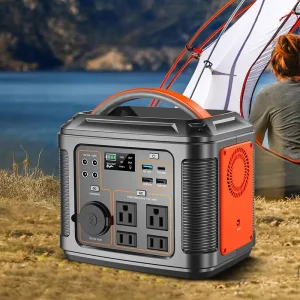
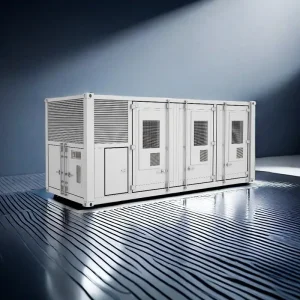
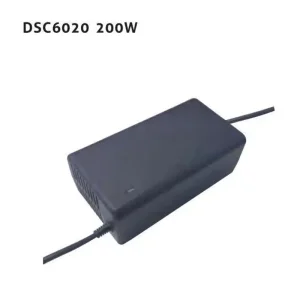
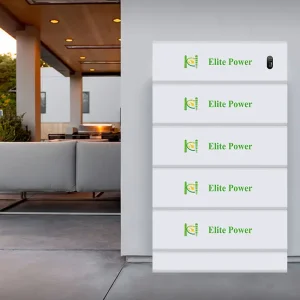
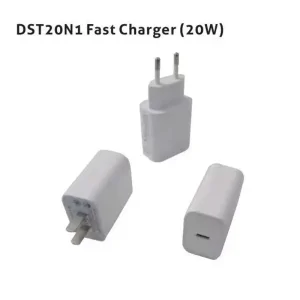
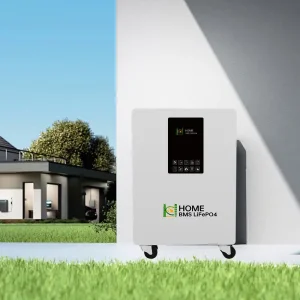
Our expanded range of heavy-duty vehicle power solutions, charging stations, and grid-tied terminal storage systems deployed across the New York region.
Providing technical answers to help fleet managers evaluate battery systems for the northeastern logistics corridor.
Under NY State DEC regulations, commercial diesel vehicles over 8,500 lbs cannot idle for more than 5 minutes. In NYC, code § 24-163 limits idling to 3 minutes, or 1 minute near schools. Fines range from $220 to over $2,000. These restrictions apply regardless of ambient temperature, making electric parking batteries or alternative APUs necessary during rest periods.
Standard Lithium-ion batteries can degrade if charged below freezing (0°C/32°F) due to lithium plating. Elite Power truck batteries feature an integrated smart BMS with automated heating pads. When charging is detected in cold weather, the system warms the cells above freezing before allowing charge currents to enter, maintaining battery life and performance.
Run time depends on the battery pack capacity and the HVAC load. A typical 24V 400Ah (approx. 10kWh) battery pack can run a high-efficiency electric scroll-compressor air conditioner (drawing 600-800W) for 10 to 14 hours. This aligns with the federally mandated 10-hour driver rest break, leaving a safety margin for other cabin electronics.
LiFePO4 offers several key performance advantages: it delivers 4,000+ charge cycles at 80% discharge compared to 400-500 cycles for AGM; it maintains steady voltage output throughout its discharge curve; and it weighs about 50-60% less for equivalent usable energy. These features improve vehicle fuel efficiency and reduce replacement cycles.
We work with commercial fleet operations to provide tailored dimensions, voltage outputs (12V, 24V, or 48V), and integrated communication interfaces (such as CAN bus and J1939). This allows our battery packs to integrate with existing vehicle cabin wiring and telematics systems.
 ELITE POWER