In an era dominated by USB-C, the demand for High-Quality Micro USB Charging Cords remains highly robust across global industrial ecosystems. Legacy automation pipelines, intelligent home automation setups, healthcare monitoring hubs, and low-power IoT structures rely heavily on the micro-USB form factor. The design's compactness and structural stability represent a proven standard for hardware engineers who value component lifespan over fleeting consumer trends.
As a premier manufacturing partner based in the heart of China’s electronics manufacturing hubs (Dongguan and Shenzhen), our factories address critical structural weaknesses inherent in sub-par micro-USB lines. Standard consumer cords fail after fewer than 2,000 bending cycles due to thin gauge wires and cheap solder joints. We overcome this bottleneck by integrating refined structural elements, such as reinforced internal SR (Strain Relief) boots, tinned 24 AWG pure copper cores for power delivery, and dual-layer shielding designed to endure over 10,000 continuous insertions.
For enterprise sourcing directors, finding a factory capable of producing massive runs of customized micro-USB assemblies while maintaining absolute compliance (RoHS, REACH, UL) is essential. Our production protocols treat micro-USB cables not as generic accessories, but as critical connection conduits required for the consistent operation of POS terminals, medical devices, emergency lighting, and commercial-grade furniture battery systems.
A premium charging cord's performance is determined at the molecular level. Typical failures in electronic circuits arise from voltage drop over distance and shielding failures that create electromagnetic interference (EMI). Elite micro-USB cables utilize a complex configuration optimized for high current and clean data transmission:
We use 24 AWG oxygen-free pure tinned copper for power transmission pathways and 28 AWG for data sync cores. This reduces resistivity, allowing sustained 2.4A fast charging with negligible thermal buildup, avoiding damage to connected battery systems.
Each cable is wrapped in an inner Aluminum Mylar foil shield, followed by a high-density tinned copper braided mesh. This isolates the internal signal lines from EMI, preserving data integrity in noisy industrial control rooms.
The Micro-USB contact pins feature 30u" gold plating to prevent surface oxidation. The terminal shell is injection-molded under high pressure using hard and soft TPU materials, preventing the plug from pulling away from the cable body.
Options range from flame-retardant PVC (UL94 V-0 rated) to ultra-flexible double-braided nylon and silicone jackets. This ensures durability in harsh environments where cords may come into contact with oils or extreme temperatures.
Flex Life Cycle Rating
Max Rated Power Delivery
AQL Quality Inspection
Halogen/RoHS Compliance Violations
Manufacturing reliable cords requires standardized workflows. Operating under rigorous ISO 9001:2015 quality management controls, our factories employ automated machinery coupled with skilled operators to achieve high efficiency. The production flow includes:
Raw copper rods are drawn, tinned, and insulated with precise PVC extrusion machines that monitor outer diameter consistency. Variations are kept under 0.02mm to ensure uniform resistance.
Cables are stripped and soldered to connector terminals using automated laser soldering units. An inner PE (Polyethylene) structural mold is then injected to encapsulate the solder joints, protecting them from internal movement.
A second injection-molding process applies the outer PVC or TPU material, forming the plug head and integrated strain relief sleeve. This double-mold process prevents typical structural failures near the plug connector.
Every cable undergoes a sequence of electronic and mechanical evaluations before packaging:
• Open/Short Circuit Test: Confirms 100% electrical continuity.
• Voltage Drop & Resistance Test: Rejects components with high power dissipation.
• Bending & Tensile Stress Test: Sample sets are flexed repeatedly under load.
• Salt Spray Corrosion Test: Ensures gold-plated interfaces do not corrode in humid shipping environments.
ELITE POWER is a subsidiary of GRACE DEVELOPERS CO., LIMITED. We maintain branch offices and advanced design labs in Hong Kong, Shenzhen, and Dongguan, China. Operating as a clean energy enterprise, we integrate scientific research, custom industrial design, and volume manufacturing to deliver intelligent green power storage solutions.
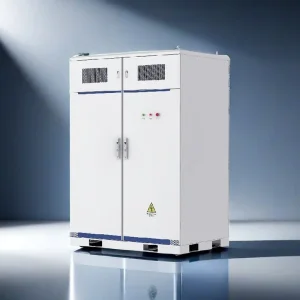
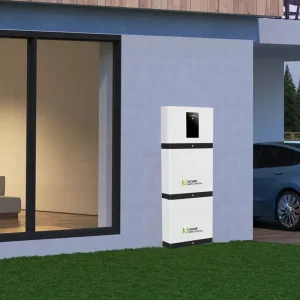
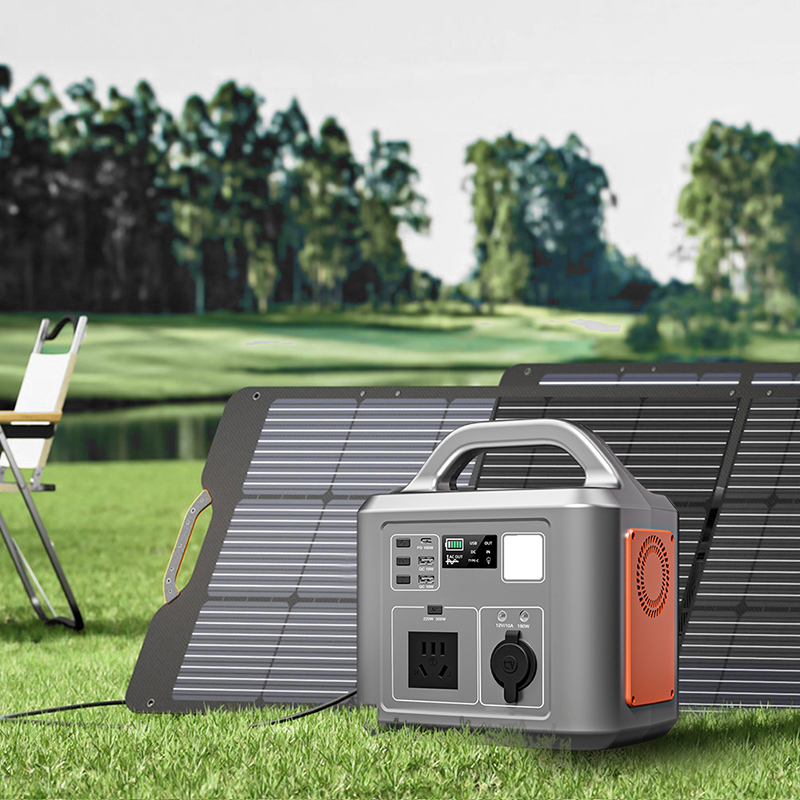
Our diverse portfolio includes household energy storage systems, large industrial and commercial energy storage cabinets, portable energy stations, and specialized electronics. This extensive manufacturing background enables us to design and supply robust connector options, including custom high-current micro-USB lines for smart furniture batteries, truck lithium starter systems, and high-spec industrial installations.
In 2022, we finalized a strategic partnership with US-based allies to develop solar storage and vehicle charging solutions for the American market. This agreement includes supplying home energy storage products, and collaborating on high-duty truck battery emergency activation grids.

We operate with honesty, complete transparency, and ethical practices in all our global business partnerships.

We are dedicated to advancing renewable power technologies and interface designs for a cleaner energy future.

We strive for detail-oriented execution across our entire workflow, from R&D prototyping to global logistics support.

We prioritize long-term, mutually beneficial relationships with our worldwide clients and raw material suppliers.
Operating production facilities across Hong Kong, Shenzhen, and Dongguan allows us to utilize regional supply chains effectively. Our Dongguan factory is optimized for high-volume extrusion, wire drawing, and automated molding, while our Shenzhen facilities manage custom engineering and high-frequency testing. This structure ensures fast transit to major shipping hubs, minimizing global delivery timelines.
We carry ISO 9001:2015 and ISO 14001:2015 certifications, reflecting our commitment to structured quality control and environmentally conscious production processes.
Our cables and components comply with key environmental directives, including RoHS, REACH, CE, and FCC standards. When manufacturing micro-USB cables for medical equipment, portable power banks, or retail electronics, we select materials that meet local safety and chemical regulations in North America, the European Union, and the Asia-Pacific region.
As electronic devices evolve toward higher integration, interconnect technologies must adapt. Our engineering division focuses on three main developments:
To reduce plastic waste, we are testing plant-based thermoplastic elastomers (TPE) that break down safely in composting environments, helping our OEM customers meet their corporate sustainability targets.
For industrial automation setups that cannot migrate to USB-C, we are developing micro-USB connectors capable of supporting up to 3.0A power delivery. These utilize high-conductivity copper alloys and reinforced pin assemblies to manage increased thermal loads.
We are incorporating micro-LED and smart chip configurations into connector heads to display active current loads and thermal metrics, assisting field technicians in diagnosing installation issues quickly.
Voltage drop is directly proportional to wire resistance and length. By using thicker 24 AWG copper cores instead of standard 28 AWG, we reduce resistance by approximately 60%. This maintains 5V delivery over longer runs, avoiding system power resets.
We provide comprehensive OEM customization. This includes custom molded logos on the connector housings, tailored cable lengths from 10cm to 5m, variable jacket colors, and custom retail or bulk packaging designs.
We conduct continuous in-process testing during production. Extrusion dimensions are verified via laser measurement systems, and completed cables undergo automated electrical parameter and physical strength testing to ensure consistent quality.
Yes, our industrial-grade cables utilize anti-corrosive gold-plated contacts and chemical-resistant TPU outer jacketing, enabling reliable operation in challenging industrial conditions.
 ELITE POWER